 Pin It
 The first time I tasted authentic tom yum, I was sitting cross-legged on a plastic stool at a Bangkok street stall, steam rising into my face while the vendor moved with practiced speed around a massive pot. That first spoonful hit like a revelation—the lemongrass, the lime, the heat creeping up my throat, all balanced so perfectly that I couldn't stop going back for more. Years later, I found myself trying to recreate that magic in my own kitchen, and what started as a desperate attempt to chase that memory became something I now make whenever I need to feel transported, or when friends are coming over and I want to serve something that tastes like an adventure.
I remember making this for my partner on a rainy Tuesday evening when neither of us felt like going out, and watching their expression change from skeptical to completely hooked after that first slurp was worth every minute of prep work. The apartment smelled incredible—kind of like a Thai restaurant had exploded in the best possible way—and somehow the soup managed to be both comforting and exciting at the same time.
Ingredients
- Chicken or vegetable stock (4 cups): This is your foundation, so use something you actually enjoy tasting on its own—it makes a real difference in the final bowl.
- Lemongrass (2 stalks, trimmed and smashed): Smashing it releases all those bright, aromatic oils, which is the whole point; don't skip this step or just slice it finely.
- Kaffir lime leaves (4, torn): These are non-negotiable if you want authentic flavor, though regular lime zest is a decent stand-in if you're stuck.
- Galangal (3 slices): It's like ginger's more complex, slightly peppery cousin; fresh ginger works if that's all you have, but galangal is worth seeking out.
- Thai bird's eye chiles (2, sliced): Start with one if you're heat-sensitive, since these little guys pack serious punch.
- Mushrooms (200 g, sliced): Use whatever fresh mushrooms you find—cremini, button, or oyster all work beautifully here.
- Tomatoes (2 medium, cut into wedges): Fresh tomatoes matter; they add sweetness and brightness that canned can't quite capture.
- Onion (1 small, sliced): It melts into the broth and adds subtle sweetness as everything simmers.
- Garlic (3 cloves, smashed): Smashing releases the oils just like with the lemongrass, making the garlic flavor more integrated.
- Shrimp (300 g, peeled and deveined): Frozen shrimp are fine here; just make sure they're thawed before cooking so they cook evenly.
- Fish sauce (3 tbsp): I know it smells funky straight from the bottle, but trust me—this is what makes the soup taste authentically tom yum, so don't skip it.
- Fresh lime juice (2 tbsp): Always fresh-squeezed; bottled just doesn't have the same brightness.
- Sugar (1 tsp): This tiny amount rounds out the flavors and brings all the bold tastes into harmony.
- Chili paste (1 tsp nam prik pao, optional): This adds a smoky, roasted depth if you want to layer your heat more complexly.
- Fresh cilantro and green onions (for garnish): These finish the dish with freshness and color.
- Lime wedges (to serve): Let everyone squeeze their own to taste.
Tired of Takeout? 🥡
Get 10 meals you can make faster than delivery arrives. Seriously.
One email. No spam. Unsubscribe anytime.
Instructions
- Build your aromatics foundation:
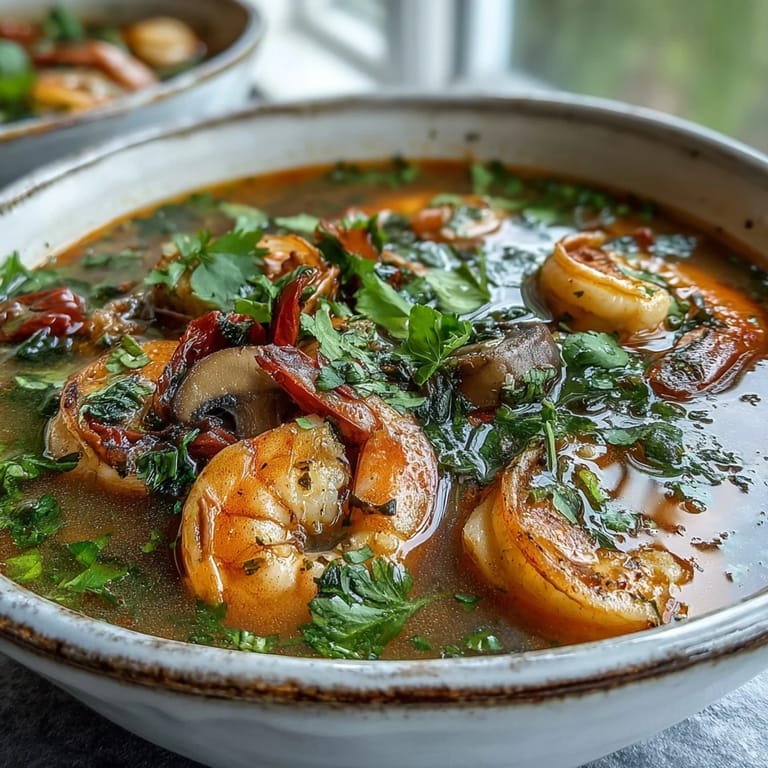
- Bring your stock to a gentle boil, then add the lemongrass, kaffir lime leaves, galangal, chiles, garlic, and onion all at once. Let this simmer for a full 10 minutes—this is when the magic happens, as all those flavors start talking to each other and infusing into the broth.
- Add the vegetables:
- Toss in your sliced mushrooms and tomato wedges and let them cook for about 5 minutes until the mushrooms soften and start releasing their moisture into the soup. You'll notice the broth starts to taste richer and more complex.
- Cook the protein quickly:
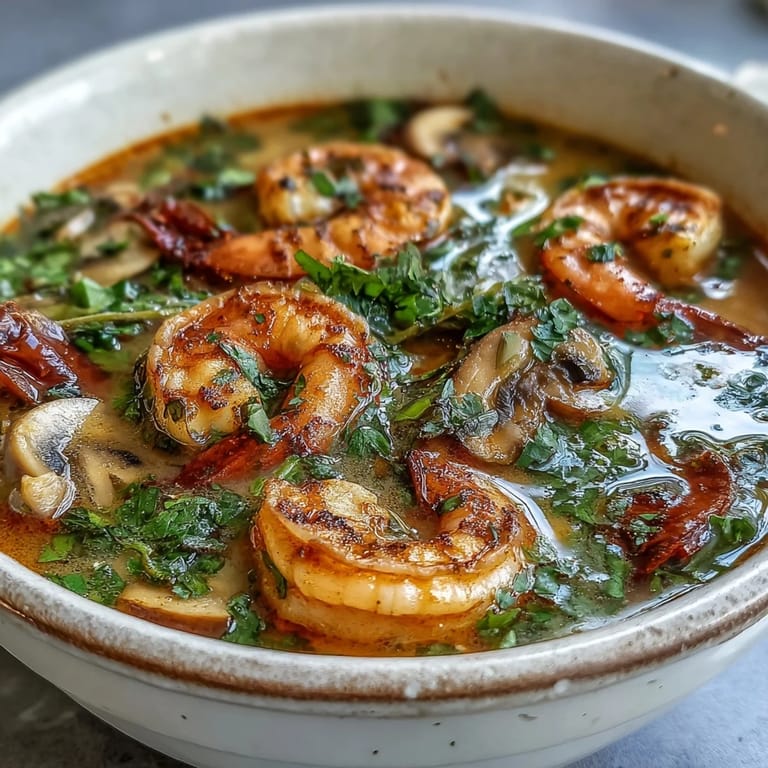
- Add your shrimp (or tofu) and watch carefully—shrimp only needs 2 to 3 minutes to turn pink and cook through, so don't walk away from the pot or you'll end up with rubber. If using tofu, just let it warm through for the same amount of time.
- Season and taste:
- Stir in the fish sauce, fresh lime juice, sugar, and chili paste if you're using it. Now taste and adjust—this is where the soup becomes your own, adding more lime if you want it tangier, more chiles if you want more heat, or a pinch more salt if it needs it.
- Serve immediately:
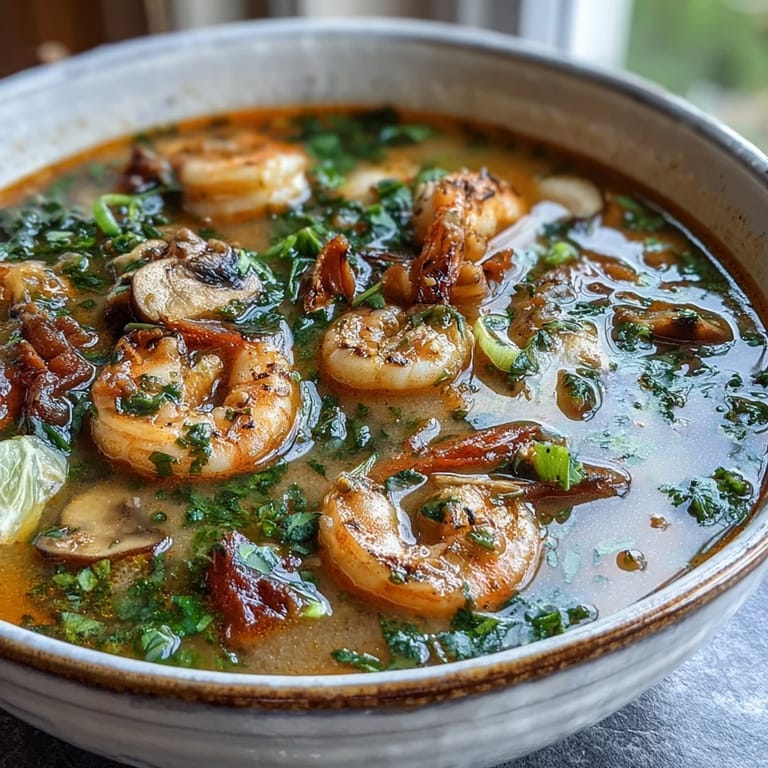
- Ladle the soup into bowls while it's still steaming, top with fresh cilantro and green onions, and set lime wedges on the side so everyone can squeeze their own to taste.
 Pin It
 There was a moment when a friend who claimed to hate spicy food asked for a second bowl, then a third, which told me everything I needed to know about how balanced this soup really is. It's one of those dishes that somehow feels both elegant and totally approachable, like you've created something special without breaking a sweat.
Finding Your Flavor Balance
Tom yum is all about the interplay between four tastes, and once you understand this, you can adjust the soup to exactly how you like it. The sourness comes from lime, the heat from chiles, the saltiness from fish sauce, and the savory depth from the aromatics and broth—none of them should overwhelm the others. I learned this the hard way by making a batch way too salty and another that was aggressively spicy without any other complexity, so now I always taste as I go and adjust in small increments.
Vegetarian and Dietary Variations
Making this for vegetarian friends doesn't mean making a lesser version—swap vegetable stock for chicken, use tofu instead of shrimp, and swap soy sauce for the fish sauce and you've got something equally delicious and flavorful. I've actually had vegetarian tom yum convert people who swore they needed the shrimp for it to be authentic, so don't hesitate to adapt it.
Pairing and Storage Tips
This soup is beautiful on its own, but serving it alongside jasmine rice or with a noodle option gives it more substance and makes it feel like a complete meal. Tom yum keeps well in the fridge for a few days, though the flavors actually deepen as it sits, which is one of those rare cases where leftovers might be better than the original.
- If you're making it ahead, store the soup base separately from the garnishes so everything stays fresh.
- You can prep all your ingredients the day before and just cook them when you're ready to eat.
- Freeze the aromatics-infused broth on its own for up to a month, then just add fresh vegetables and protein when you want soup.
 Pin It
 This soup is the kind of thing that tastes incredibly impressive but somehow feels effortless to make once you know the rhythm of it. It's become my go-to when I want to feel like I've traveled somewhere without leaving my kitchen.
Recipe Questions
- → Can I make Tom Yum Soup vegetarian?
Yes, substitute vegetable stock for chicken stock, use tofu instead of shrimp, and replace fish sauce with soy sauce. The aromatic herbs and lime will still provide authentic flavor.
- → What can I use if I can't find galangal?
Fresh ginger makes an excellent substitute for galangal. While the flavor is slightly different, it provides similar aromatic warmth and pairs well with the lemongrass and lime leaves.
- → How spicy is Tom Yum Soup?
The heat level is adjustable. Start with one Thai chile and add more to taste. You can also control spiciness through the optional chili paste, making it mild to very hot based on preference.
- → Can I prepare the broth in advance?
Absolutely. Simmer the stock with aromatics up to 2 days ahead and refrigerate. When ready to serve, reheat and add the vegetables, protein, and final seasonings for fresh flavor.
- → What proteins work well besides shrimp?
Chicken, firm tofu, fish fillets, or mixed seafood all work beautifully. Adjust cooking times accordingly—chicken needs 5-7 minutes, while delicate fish requires only 3-4 minutes.
- → Do I need to remove the lemongrass before serving?
While the aromatics are edible, lemongrass stalks, galangal slices, and lime leaves are typically left in for flavor but not eaten. You can strain them out or simply move them aside while eating.