 Pin It
 I discovered this peanut noodle bowl on a sweltering afternoon when my fridge felt emptier than my energy levels. A jar of peanut butter, some wilting vegetables, and a box of rice noodles somehow transformed into something so satisfying that I've made it at least once a week ever since. There's something almost magical about how a simple dressing can elevate humble noodles into a complete meal that tastes far more complicated than it actually is. The first time I served it to friends, they were genuinely shocked it took only 30 minutes from start to finish. Now it's become my go-to when I need something that feels both impressive and achievable.
Last spring, I made this for a potluck and watched someone take a bite with zero expectations, only to immediately ask for the recipe with their mouth still half-full. That moment stuck with me because it reminded me that sometimes the simplest dishes create the biggest impressions. The best part was seeing how people customized their own bowls—someone added cucumber, another person grabbed extra cilantro, and one friend squeezed lime over everything. It became less about following rules and more about each person discovering what they loved most about it.
Ingredients
- Rice noodles or wheat noodles (300 g): Rice noodles have a delicate texture and stay tender when dressed with the peanut sauce; wheat noodles are sturdier if you prefer a chewier bite, and both hold the dressing beautifully without becoming mushy.
- Carrot (1 medium, julienned): The natural sweetness brightens the savory dressing, and julienning (not grating) keeps each strand crisp and pleasant to eat.
- Red bell pepper (1 small, thinly sliced): Raw pepper adds both sweetness and a slight crunch that contrasts wonderfully with soft noodles.
- Red cabbage (1 cup shredded): This vegetable is your secret weapon for crunch that actually lasts—it won't wilt as quickly as other greens even when coated with dressing.
- Scallions (2, thinly sliced): The sharp onion flavor cuts through the richness of the peanut dressing and adds a fresh, slightly peppery note.
- Fresh cilantro (1/2 cup leaves): If you love cilantro, it feels essential; if you're someone who finds it soapy, you can skip it or use fresh basil instead.
- Bean sprouts (1/2 cup): They provide an almost effervescent crunch and are mild enough to let other flavors shine.
- Creamy peanut butter (1/3 cup): Use natural peanut butter if you can—the flavor is more authentic, though you may need to stir in any oil that has separated on top.
- Soy sauce (2 tbsp): This is your umami backbone; tamari works perfectly if you need gluten-free, and the saltiness actually prevents the dressing from tasting one-dimensional.
- Sesame oil (1 tbsp): A little goes a long way with sesame oil—its toasted, nutty richness is impossible to replicate, so don't skip it or use neutral oil instead.
- Rice vinegar (1 tbsp): The mild acidity balances the richness and adds brightness without harshness.
- Honey or maple syrup (1 tbsp): Either works, though maple syrup dissolves more easily into the warm dressing and creates a smoother consistency.
- Fresh ginger (1 tsp, grated): Grate it just before mixing to capture the sharp, spicy edge that makes the whole dressing feel alive.
- Garlic clove (1 small, minced): One small clove is enough—too much and it becomes aggressive, too little and the dressing tastes flat.
- Warm water (2–4 tbsp): Add this gradually while whisking to control the dressing consistency; thicker is better initially, and you can always thin it out.
- Roasted peanuts (2 tbsp, chopped): Rough chopping gives you varied textures, and roasted peanuts add deeper flavor than raw ones.
- Toasted sesame seeds (1 tsp): Toasted seeds have exponentially more flavor than raw; toast your own if you have time, otherwise store-bought toasted seeds work beautifully.
- Lime wedges: Lime brightens everything at the last moment and lets each person control how much zing they want.
Tired of Takeout? 🥡
Get 10 meals you can make faster than delivery arrives. Seriously.
One email. No spam. Unsubscribe anytime.
Instructions
- Cook the noodles until tender:
- Bring a pot of water to a rolling boil and add noodles, stirring occasionally so they don't clump together—this takes about 4–5 minutes for most brands, though rice noodles can be ready even faster. Once they're soft but not mushy, drain them immediately and rinse under cold running water until they're completely cool and no longer stick to each other.
- Whisk the peanut dressing into silky smoothness:
- In a medium bowl, combine peanut butter, soy sauce, sesame oil, rice vinegar, honey, ginger, and garlic, whisking everything together into a rough paste. Then gradually whisk in warm water a tablespoon at a time until the dressing becomes pourable and silky, which is when you know you've hit the right balance.
- Gather all the vegetables in one place:
- In your largest mixing bowl, combine the cooled noodles, carrot, bell pepper, cabbage, scallions, cilantro, and bean sprouts, using your hands or tongs to toss them gently together. This step ensures nothing gets hidden at the bottom when you add the dressing.
- Dress the noodles while they're cool:
- Pour the peanut dressing over the noodle and vegetable mixture and toss thoroughly using two spoons or salad tongs until every strand of noodle and piece of vegetable glistens with dressing. This takes longer than you'd think, and the extra effort is worth it because no dry noodles hiding at the bottom means every bite tastes complete.
- Plate and top with finishing touches:
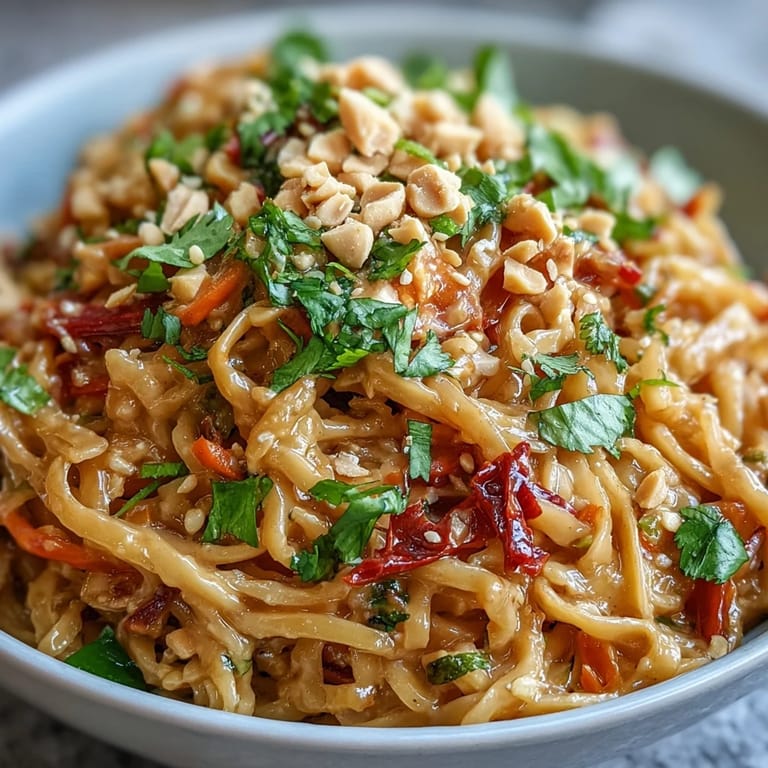
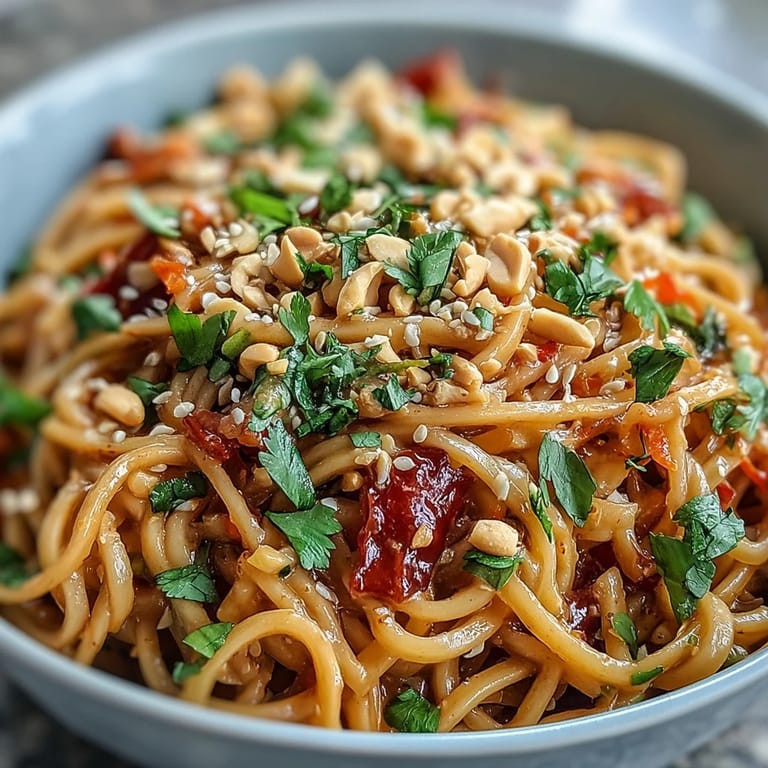
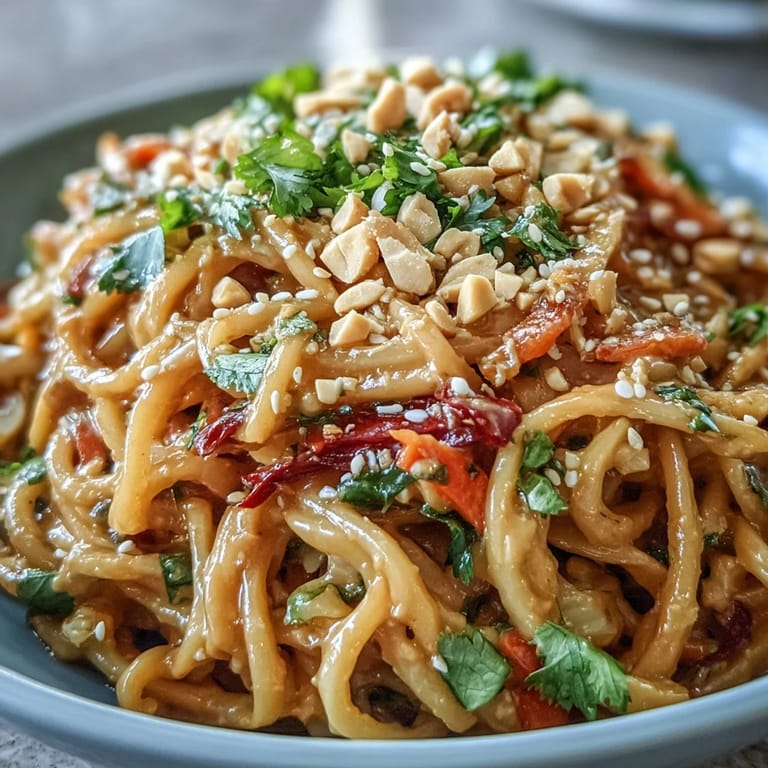
- Divide the noodle bowl among serving plates and crown each portion with a small handful of chopped peanuts, a sprinkle of toasted sesame seeds, and a few extra cilantro leaves if you're feeling generous. Serve each bowl with lime wedges so people can add brightness to taste.
- Serve cold or gently warm as preferred:
- This dish is wonderful straight from the fridge on a warm day, or you can gently reheat it in the microwave for 1–2 minutes if you prefer something softer and warmer. Either way, taste it first and adjust the seasoning with a squeeze of lime or a drizzle more sesame oil if needed.
 Pin It
 There was an evening when I made this bowl for myself after a long day, and I realized halfway through eating that I hadn't thought about anything except the flavors and textures for the first time in hours. That's when I understood this recipe wasn't just convenient—it was actually restorative. Simple food made with intention has a way of reminding us that we don't need complicated effort to create something nourishing.
When to Serve This Bowl
This bowl is a shape-shifter that works for so many occasions. On a quiet weeknight, it's a complete dinner that doesn't require any thinking beyond opening containers and chopping vegetables. Bring it to a potluck and watch people gravitate toward it again and again because everyone's familiar enough with peanut flavors to feel brave trying it, yet it still feels a little bit special. Pack it in a container for lunch tomorrow and it tastes even better after the flavors have gotten to know each other overnight.
Customizing Your Bowl
The vegetable lineup I've suggested works beautifully, but this recipe genuinely thrives on flexibility. Cucumber adds a watery crunch that's refreshing on warm days, snap peas bring a subtle sweetness, avocado turns everything creamy without changing the dressing, and shredded daikon radish adds a peppery note that changes the whole personality of the bowl. I've also experimented with adding grilled tofu for protein (which absorbs the dressing like a dream), shredded rotisserie chicken for something quicker, or roasted shrimp for elegance. The dressing is so flavorful that it makes nearly every addition taste intentional rather than random.
Dressing Wisdom and Last-Minute Thoughts
The peanut dressing is honestly the heart of this entire recipe, so it deserves a moment of attention. Make it while the noodles are cooking so it has time to mellow slightly, and taste it before you commit it to the bowl because peanut butter brands vary wildly in saltiness and intensity. If your dressing ends up too thick, you can always thin it with water, but if it's too thin or too runny, there's no rescue—so add water slowly and thoughtfully.
- Toast your own sesame seeds in a dry skillet for 2–3 minutes if you have time; the difference in flavor is genuinely noticeable.
- If you're making this ahead, keep the dressing separate and toss everything together just before serving so the vegetables stay crisp.
- Leftover dressing keeps for about five days in the refrigerator and works beautifully on roasted vegetables, grain bowls, or even as a dipping sauce for spring rolls.
 Pin It
 This peanut noodle bowl has become the recipe I make when I want to feel capable in the kitchen without spending an entire evening there. It's the kind of dish that reminds you cooking doesn't have to be complicated to be genuinely delicious.
Recipe Questions
- → Can I make this gluten-free?
Yes, use rice noodles and tamari instead of regular soy sauce to make it completely gluten-free.
- → How long does the peanut dressing last?
The dressing keeps well in the refrigerator for up to 5 days in an airtight container. It may thicken—just whisk in a little warm water before using.
- → Can I add protein to this bowl?
Absolutely. Grilled tofu, shredded chicken, or sautéed shrimp work beautifully. Add about 1 cup of protein per serving.
- → What other vegetables can I use?
Snap peas, cucumber, shredded broccoli, or sliced radishes make excellent additions. Use whatever fresh vegetables you have on hand.
- → Is this better served cold or warm?
It's delicious either way. Serve cold for a refreshing lunch, or gently warm the dressed noodles for a comforting dinner.