 Pin It
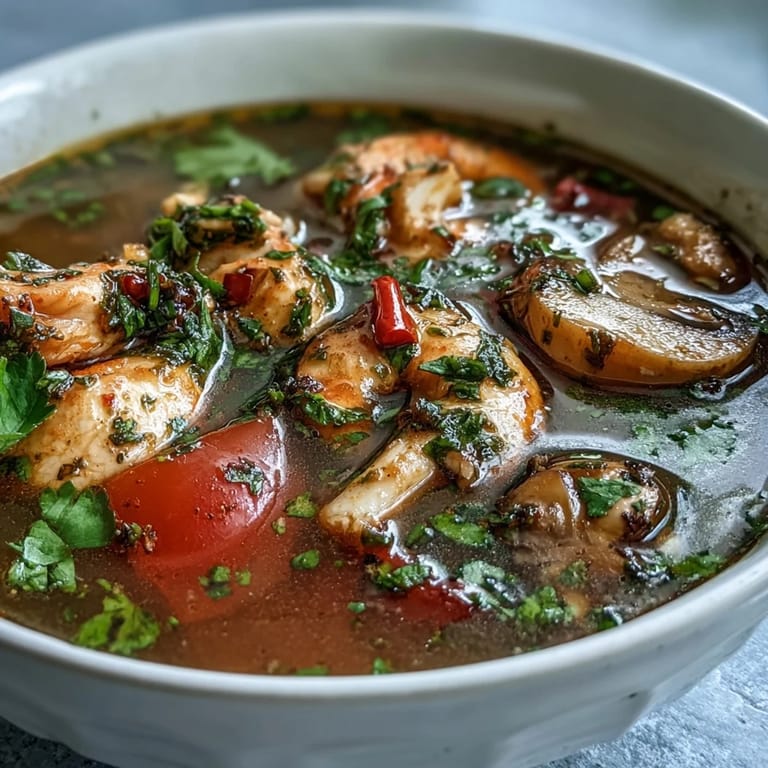
 The first time I truly understood tom yum was sitting cross-legged on a plastic stool outside a Bangkok street stall at dusk, watching the vendor work with the kind of practiced speed that only comes from making the same soup a thousand times. One slurp and I was undone—the heat didn't burn so much as bloom, followed by this bright citrus note that made my eyes water in the best way. Years later, I realized I could capture that same magic at home, and it turns out the secret isn't fancy ingredients or a special technique, just respecting what each ingredient brings to the party.
I made this for my roommate on a gray February afternoon when she came home sick, and watching her face light up on the first spoonful made me understand why so many cultures have a chicken soup recipe—it's about more than nutrition. She said it tasted like Bangkok without the jet lag, and honestly, that stuck with me.
Ingredients
- Boneless, skinless chicken thighs or breasts (400 g), thinly sliced: Thighs stay more forgiving if you're not timing it perfectly, but either works—the key is slicing them thin so they cook fast and absorb all those aromatic flavors.
- Chicken stock (1.2 liters): Use good quality stock because it's the foundation; a weak broth means you're fighting an uphill battle from the start.
- Lemongrass (2 stalks, trimmed and smashed): Bruising it really does matter—you're cracking open the cells to release those intoxicating oils that make tom yum taste like tom yum.
- Fresh galangal (4 slices, about 12 g) or dried galangal (2 tsp): This rhizome is sharper and more floral than ginger; if you can only find dried, use less because it concentrates.
- Makrut lime leaves (5, torn into pieces): They look fragile but pack a serious punch—one leaf is enough to shift the whole flavor profile, so don't skip them.
- Birds eye chilies (4, lightly crushed): Leave them whole or crack them slightly depending on your heat tolerance; crushing releases more capsaicin into the broth.
- Mushrooms (150 g, sliced): Oyster mushrooms absorb flavor beautifully, but button mushrooms work in a pinch—they add earthiness that balances the citrus.
- Tomatoes (2 medium, cut into wedges): Cherry tomatoes are too small and won't give you those nice tender pieces; go for regular tomatoes and cut them generously.
- Onion (1 small, sliced): This mellows as it cooks and provides subtle sweetness—don't skip it or the flavor becomes too sharp.
- Garlic (3 cloves, smashed): Smashing instead of mincing keeps the pieces visible and prevents them from disappearing into the broth entirely.
- Fish sauce (3 tbsp): I know it smells like low tide, but this is the umami anchor that ties everything together—taste as you go because a little goes a long way.
- Lime juice (2 tbsp fresh): Fresh lime is non-negotiable here; bottled juice tastes tinny and misses that bright snap you're after.
- Sugar (1 tsp): A tiny bit rounds out the sharp edges without making it sweet—think of it as a gentle hand on the reins.
- Salt (½ tsp): Adjust at the end because fish sauce already brings saltiness.
- Fresh cilantro and spring onions for garnish: These finish the dish with freshness and color, cutting through the richness of the broth.
Tired of Takeout? 🥡
Get 10 meals you can make faster than delivery arrives. Seriously.
One email. No spam. Unsubscribe anytime.
Instructions
- Prep and bruise your aromatics:
- Take the lemongrass stalks and give them a firm whack with the back of your knife blade—you want to hear that crack. Do the same with the galangal slices and let the makrut leaves fall where they may; you're waking up their oils and getting them ready to infuse.
- Build your broth foundation:
- Pour the chicken stock into your largest pot and crank the heat high. Once it's rolling, add the lemongrass, galangal, makrut leaves, chilies, and smashed garlic all at once—the steam will smell incredible, almost floral mixed with heat. Let it bubble uncovered for 5 minutes so these aromatics really marry into the broth.
- Add the chicken and cook gently:
- Stir in your thinly sliced chicken and the onion slices. The broth might foam a bit, which is fine—just skim off any gray foam that rises to the surface if you want crystal-clear soup. Simmer for 8 to 10 minutes, just until the chicken loses that raw look and turns opaque.
- Finish with vegetables:
- Now add the mushrooms and tomato wedges. Give everything a gentle stir and let it cook for another 5 to 7 minutes until the mushrooms are tender and have absorbed some of that fragrant broth. The chicken should be fully cooked through by now, not rubbery but definitely no pink.
- Season to taste:
- Here's where you become the boss: stir in the fish sauce, lime juice, sugar, and salt. Take a sip, then adjust—more lime if it tastes flat, more fish sauce if it needs that savory depth, a pinch more sugar if the sourness is too aggressive. It should taste bright and lively, not one note but a harmony.
- Finish and serve:
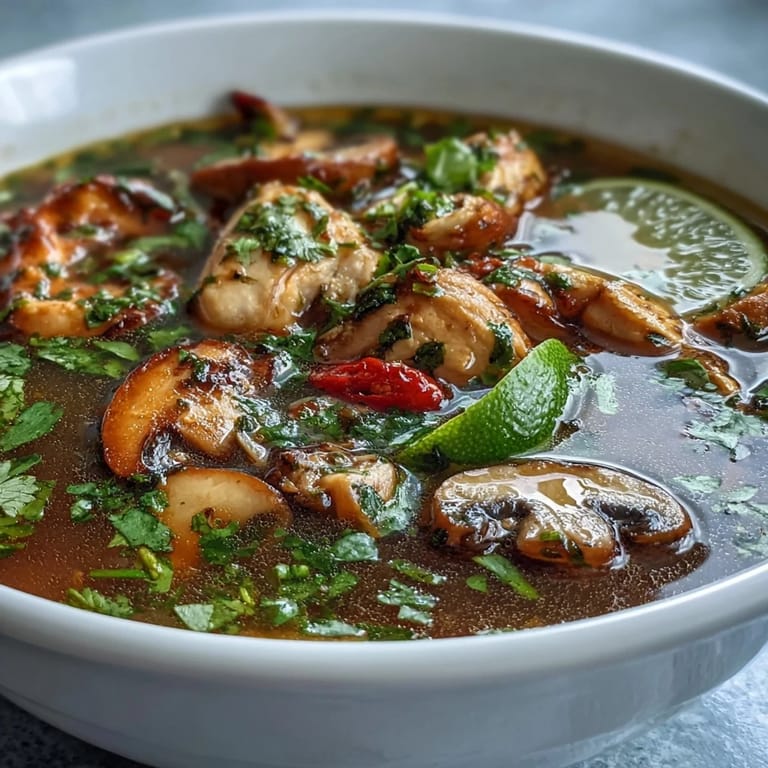
- If you want, fish out the big pieces of lemongrass and galangal though some people love leaving them in for extra flavor. Ladle into bowls and shower each one with fresh cilantro, spring onions, and a lime wedge on the side for last-minute squeezing.
 Pin It
 There's a moment when you're standing over the pot and the smell hits you—that combination of lemongrass and lime and heat—and you suddenly realize this isn't just soup, it's a flavor memory you're creating. That's when I know I've gotten it right.
The Magic of Aromatics
In tom yum, the aromatics aren't supporting players—they're the whole production. The lemongrass brings that lemony, almost citronella-like quality; the galangal adds a peppery, slightly medicinal warmth that ginger can't replicate; and the makrut leaves tie it all together with a sophisticated bitterness that haunts you in the best way. I learned this the hard way by trying to shortcut with bottled lemongrass paste once, and the soup tasted like it was apologizing for itself. Fresh aromatics aren't a luxury, they're the actual recipe.
Balancing the Holy Trinity
Every spoonful of tom yum should have spicy, sour, and salty all fighting for your attention in a three-way tie. The heat from the chilies should make you notice, the lime should make you pucker just slightly, and the fish sauce should make you go ah—that's it. Getting this balance is partly technique and partly intuition, and honestly, the intuition part comes from tasting as you go and trusting your palate.
Variations and Personal Touches
Once you understand the bones of this recipe, it becomes a template for endless variations. Swap the chicken for shrimp if you want something lighter, or add a splash of coconut milk at the end if you prefer a more rounded, creamier version. Some afternoons I'll throw in extra vegetables—bell peppers, baby corn, snap peas—whatever needs using up. The soup adapts to what you have on hand while staying true to its essential character, which is the mark of a real recipe.
- For a richer version, stir in about ¼ cup of coconut milk or evaporated milk right before serving.
- Shrimp cooks much faster than chicken, so add it in the last 3 minutes to avoid rubbery texture.
- Serve alongside jasmine rice for a complete meal, letting the rice soak up all that beautiful broth.
 Pin It
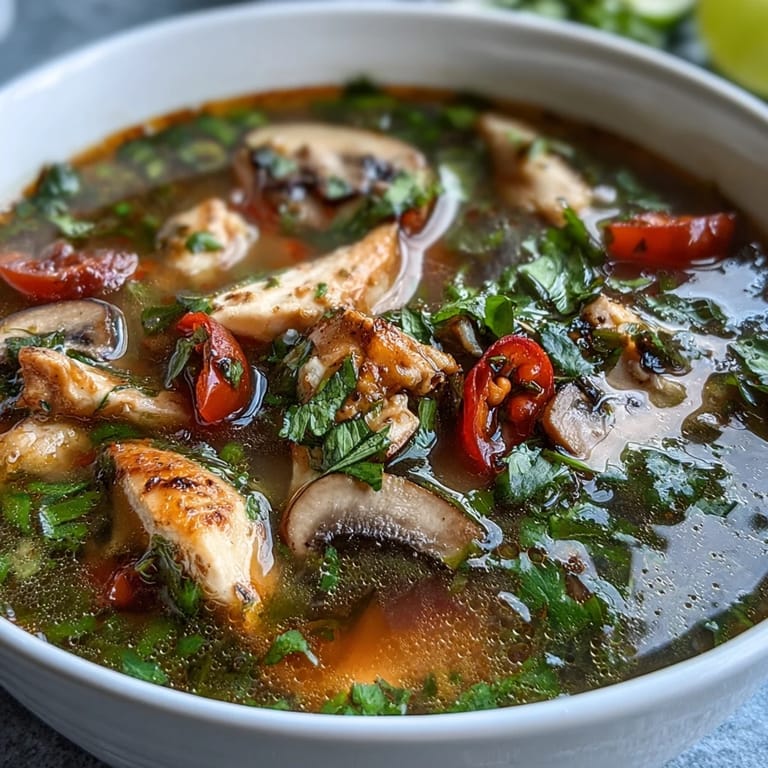
 This soup tastes like a hug from someone who knows exactly what you need to feel better. Make it often, taste as you go, and don't be afraid to make it your own.
Recipe Questions
- → Can I use chicken breast instead of thighs?
Yes, chicken breast works well. Thighs offer more flavor and tenderness, but breast meat is leaner. Slice thinly and avoid overcooking to keep it moist.
- → What can I substitute for galangal?
Fresh ginger can substitute galangal in a pinch, though it lacks galangal's distinct citrusy, piney notes. Use slightly less ginger as it's more pungent.
- → How spicy is Tom Yum Chicken?
Spice level depends on the number of birds eye chilies used. Start with 2-3 for mild heat, or use 4-6 for authentic Thai spiciness. Remove seeds to reduce heat.
- → Can I make this soup ahead of time?
Yes, prepare the broth and cook chicken in advance. Store refrigerated for up to 2 days. Add fresh lime juice and herbs just before serving for best flavor.
- → What's the difference between Tom Yum and Tom Kha?
Tom Yum is a clear, spicy-sour soup, while Tom Kha includes coconut milk for a creamy, milder version. Both feature similar aromatics like lemongrass and galangal.
- → Where can I find makrut lime leaves?
Find fresh or frozen makrut lime leaves at Asian grocery stores. Dried leaves work in a pinch but offer less aroma. Fresh lime zest can substitute, though flavor differs.