 Pin It
 One humid Bangkok evening, I watched a street vendor ladle tom kha gai into a plastic bag with the kind of practiced grace that comes from making the same soup a thousand times. The steam rose in impossible spirals, carrying coconut and lemongrass so intensely fragrant it seemed to shimmer in the air. What struck me wasn't just how good it smelled, but how something so complex in flavor could feel so effortless, so comforting. I spent the next year chasing that exact moment in my own kitchen, learning that this soup isn't about perfection—it's about letting aromatics whisper their secrets into hot broth while you watch the transformation happen.
I made this for my sister on a Tuesday night when she was going through something difficult, and watching her face soften at that first spoonful—how the tension in her shoulders seemed to melt—taught me that soup is medicine in the truest sense. She didn't want to talk about her problems, she just wanted the warmth and those bright, complicated flavors that demanded your full attention. We sat in silence mostly, just eating, and somehow that said everything.
Ingredients
- Boneless, skinless chicken breast (400 g): Slicing it thin means it cooks fast and tender without drying out, which is the difference between silky soup and stringy regret.
- Chicken stock (800 ml): Use homemade if you can, but good quality store-bought works; avoid the overly salted varieties that will throw off your seasoning balance.
- Coconut milk, full-fat (400 ml): Never use light coconut milk for this—you need the richness and body it provides, and the fat carries the flavor beautifully.
- Lemongrass (2 stalks): Smash it hard so the oils release; this is where half the magic lives, so don't skip it or substitute lightly.
- Kaffir lime leaves (4 leaves): These are worth hunting down in Asian markets because they have an aromatic brightness that lime juice alone cannot replicate.
- Galangal (3 slices): It's peppery and floral unlike ginger, but if you truly can't find it, fresh ginger works in a pinch.
- Thai bird's eye chilies (3 whole): Crushing them keeps them intact so you can fish them out later, giving you control over the heat level.
- Garlic (4 cloves) and shallots (4 small): Smashing the garlic and slicing the shallots creates layers of flavor that bloom differently as they cook.
- Oyster or white mushrooms (200 g): They're meaty enough to hold up in soup and absorb the broth beautifully without turning mushy.
- Cherry tomatoes (100 g): Halving them lets them release their juice gradually, adding brightness without overwhelming the soup.
- Fish sauce (2 ½ tbsp): This is the secret depth, the umami anchor; it might smell intense in the bottle, but trust it.
- Fresh lime juice (1 ½ tbsp): Always fresh, never bottled—this is where the tang and life come from.
- Palm sugar (1 tsp): It rounds out the sharp edges and adds a subtle complexity; brown sugar works but isn't quite the same.
Tired of Takeout? 🥡
Get 10 meals you can make faster than delivery arrives. Seriously.
One email. No spam. Unsubscribe anytime.
Instructions
- Build your aromatic foundation:
- Bring the chicken stock to a gentle boil in a large saucepan, then add the lemongrass, kaffir lime leaves, galangal, crushed chilies, smashed garlic, and sliced shallots. Simmer for 5 minutes and watch as the broth transforms from plain to perfumed—you'll actually see the color deepen slightly and smell the moment it's ready.
- Cook the chicken gently:
- Slide the thinly sliced chicken into the simmering broth and reduce the heat so it's barely bubbling, cooking for 5 to 7 minutes until the slices turn opaque and firm. The key is restraint here; a rolling boil will make the chicken tough and seize up.
- Marry in the cream:
- Pour the coconut milk in slowly while stirring gently, as if you're coaxing it to blend rather than forcing it. Add the sliced mushrooms and halved tomatoes, then simmer for another 5 minutes so they soften and release their essence without falling apart.
- Season with intention:
- Stir in the fish sauce, fresh lime juice, palm sugar, and salt, then taste and adjust—this is crucial because every palate reads these flavors differently. Some people need more lime, others find their sweet spot with an extra pinch of sugar.
- Strain if you prefer clarity:
- Use a slotted spoon to remove the lemongrass, lime leaves, galangal, and garlic if you want a cleaner presentation, though leaving them in adds rustic charm. Either way, make sure you get the chilies out so guests don't bite down on unexpected heat.
- Serve with style:
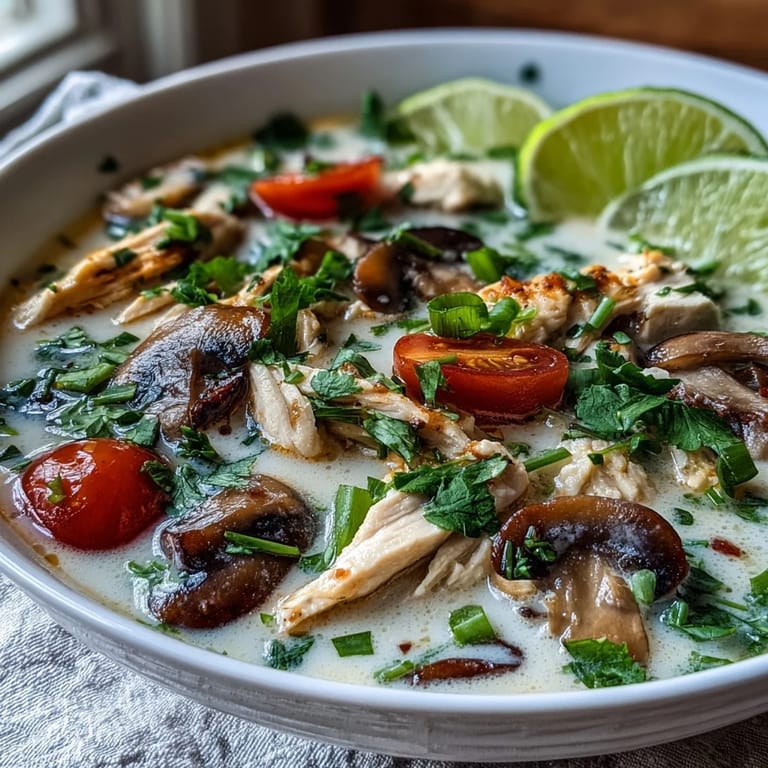
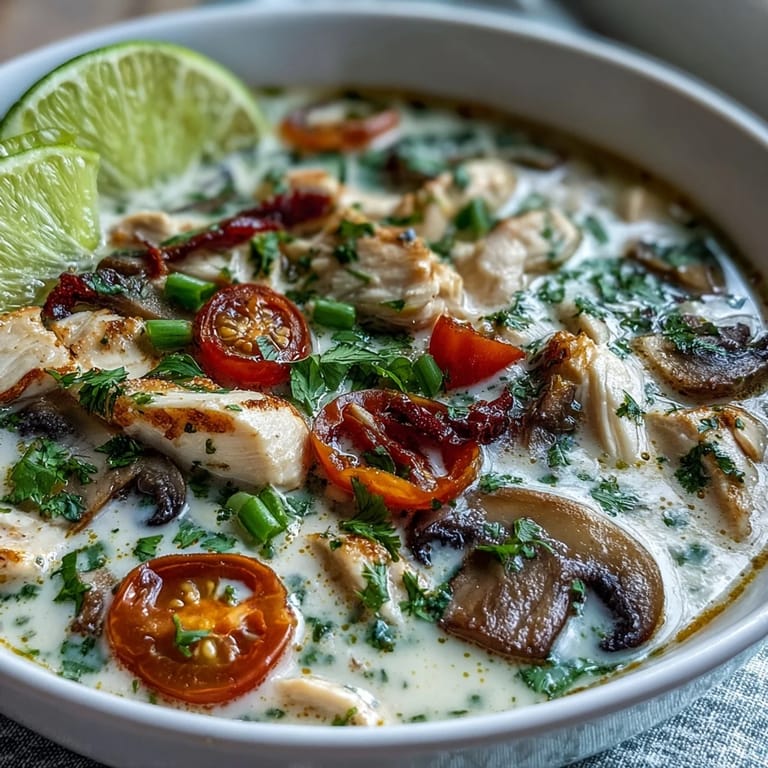
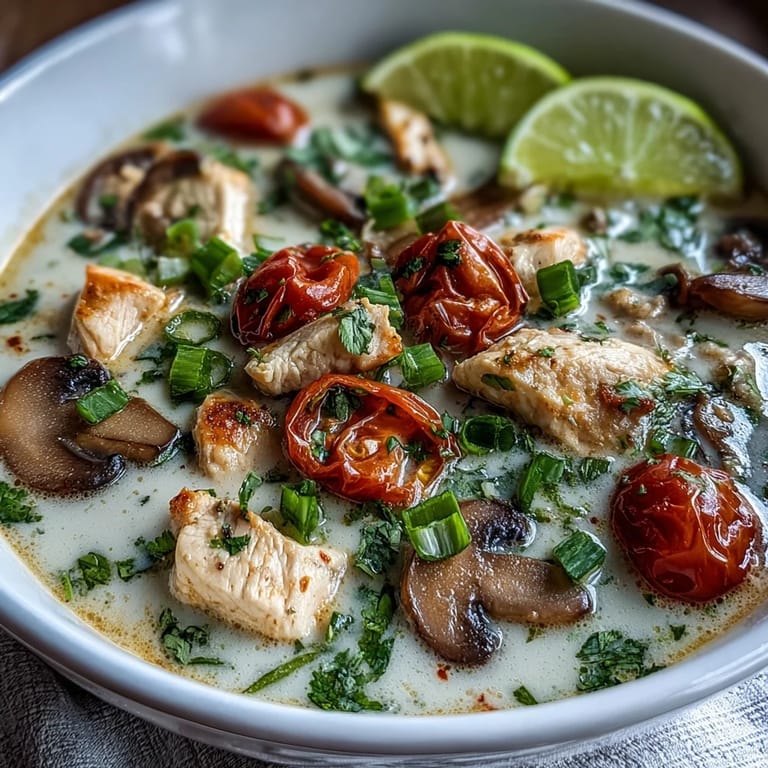
- Ladle the soup into bowls and crown it with fresh cilantro, green onions, lime wedges for squeezing, and thin slices of red chili if you're feeling bold. The garnishes aren't decoration—they're the finishing notes that make each spoonful feel complete.
 Pin It
 My neighbor once asked me why I bothered making this when there was a Thai place two blocks away, and I didn't have a good answer until she tasted it and realized the difference between a good bowl and one made by someone who actually cares. There's something about standing there with the spoon in your hand, tasting and adjusting, that transforms it from recipe into ritual.
The Truth About Aromatics
I used to think the aromatic vegetables were just background players, easy to skip if I couldn't find them, until I made a batch with only garlic and suddenly understood what I'd been missing. The lemongrass brings a citrusy, almost floral note that lime juice can never fully replicate, the galangal adds this peppery warmth, and the kaffir lime leaves create this herbal depth that lingers. When you commit to finding the real ingredients, the soup stops being a recipe and becomes an experience—your kitchen smells like a Thai market, and everyone who walks in knows something special is happening.
Adapting Without Apology
I've made versions of this soup a hundred different ways depending on what's in the fridge, and the beautiful truth is that it's forgiving enough to handle improvisation while still tasting authentically Thai. Swap mushrooms for bamboo shoots, use tofu if you're vegetarian (it soaks up the broth like a dream), add Thai eggplant if you find it, or throw in some snap peas for crunch. The skeleton—the aromatics, the coconut milk, the fish sauce and lime balance—that's what matters, and as long as you respect that, you're free to create.
Serving and Storage Wisdom
This soup is best eaten the moment it's made when everything is at its brightest, but it keeps in the refrigerator for three days and actually tastes even better the next day once the flavors have mingled overnight. Reheat gently on the stove without letting it boil, and add fresh herbs right before serving so they don't wilt into invisibility. If you're batch cooking, store the broth and solids separately so the mushrooms don't absorb all the liquid and turn everything gray.
- Serve with steamed jasmine rice to stretch the soup into a full meal and add a gentle base to balance the richness.
- Set out extra lime wedges and fresh chilies so guests can customize their own bowl—this small gesture makes everyone feel like they're eating at a proper Thai table.
- A simple green salad with a light dressing on the side provides contrast and keeps the meal from feeling too heavy.
 Pin It
 Making this soup has taught me that the best meals are the ones where you're present enough to taste what you're doing, to adjust as you go, and to understand that cooking is less about following instructions and more about listening. Every time you make it, you'll notice something new—a flavor you didn't catch before, a way to make it more yours—and that's exactly how it should be.
Recipe Questions
- → Can I substitute galangal with regular ginger?
Yes, fresh ginger works as a substitute for galangal, though galangal has a more citrusy and pine-like flavor. Use the same amount of ginger and expect a slightly different but still delicious result.
- → Where can I find kaffir lime leaves?
Kaffir lime leaves are available at Asian grocery stores, often in the frozen section. If unavailable, substitute with lime zest, though the flavor profile will be milder and less aromatic.
- → How do I prevent the coconut milk from curdling?
Keep the heat at a gentle simmer after adding coconut milk and avoid bringing it to a rolling boil. Stirring gently and maintaining low to medium heat will keep the soup creamy and smooth.
- → Can I make this soup ahead of time?
Yes, Tom Kha Gai can be prepared up to 2 days in advance. Store in an airtight container in the refrigerator and reheat gently on the stovetop. Add fresh garnishes just before serving for the best presentation.
- → What can I serve alongside Tom Kha Gai?
Steamed jasmine rice is the traditional accompaniment, making the soup more filling. You can also serve it with rice noodles, spring rolls, or Thai-style cucumber salad for a complete meal.
- → How spicy is this soup and can I adjust the heat level?
The heat level depends on the number of Thai chilies used. Start with fewer chilies for mild heat or omit them entirely for a non-spicy version. You can always add fresh sliced chili as a garnish for those who prefer more spice.