 Pin It
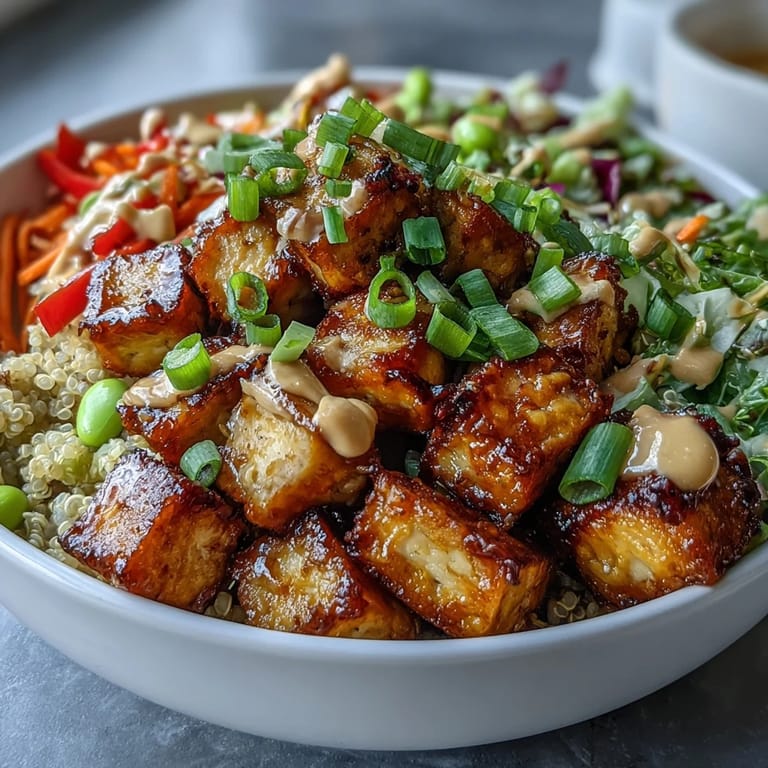
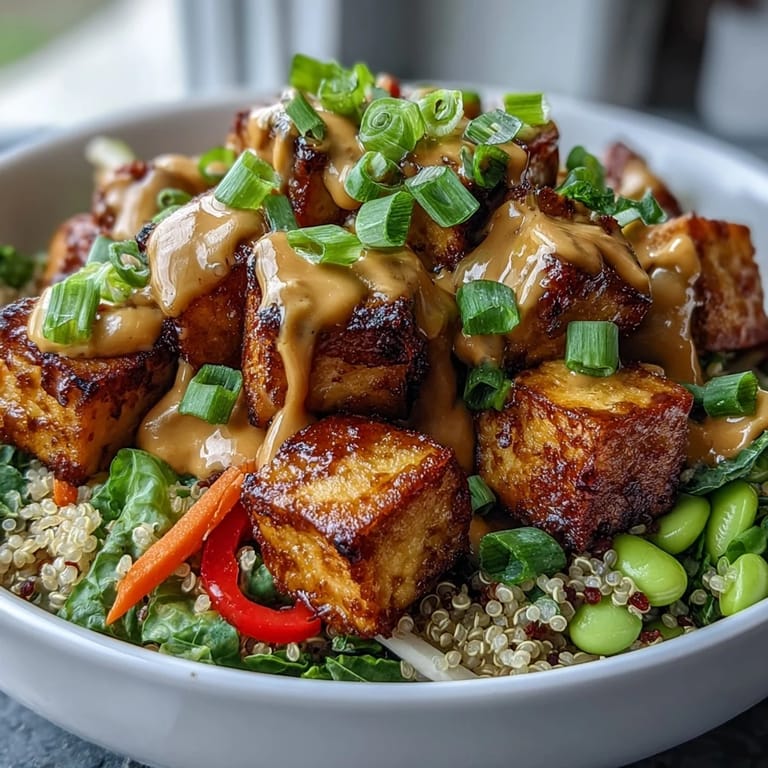
 My friend showed up at my apartment with a container of mysterious golden cubes and said, "Try this, I think I finally figured out how to make tofu not taste like sadness." That was three years ago, and it completely changed how I approach plant-based cooking. The crispy exterior, the way the peanut sauce clings to everything, the sheer brightness of all those vegetables—it felt like proof that eating well doesn't have to be complicated or boring. This bowl became my answer to those afternoons when I'm hungry but want something that actually feels substantial and exciting.
I made this for my mom the first time she asked what I actually eat for dinner, expecting her to be skeptical. Instead, she asked for the recipe before she'd even finished her bowl, and now she makes it more often than I do. There's something about a meal that convinces someone that vegan food isn't a limitation—it's just delicious—that sticks with you.
Ingredients
- Extra-firm tofu, pressed and cubed: Pressing it before cooking removes moisture so it actually crisps up instead of steaming; don't skip this step or you'll regret it.
- Cornstarch: This is the secret to that satisfying crunch—it creates a delicate, crunchy coating that regular flour never quite achieves.
- Brown rice or quinoa: Brown rice is earthier and more forgiving, while quinoa adds a subtle nuttiness and extra protein if that matters to you.
- Carrot, bell pepper, cabbage, edamame, cucumber, spring onions: Mix and match these based on what looks good at the market; the only rule is that you want bright colors and a variety of textures.
- Creamy peanut butter: Use the kind with nothing but peanuts and maybe salt—the fancy stuff will make your sauce too thick.
- Soy sauce or tamari: Tamari is genuinely better if you're watching gluten, and honestly, it tastes a bit richer.
- Maple syrup: It rounds out the spicy and salty notes without making everything taste like dessert.
- Rice vinegar or lime juice: Rice vinegar keeps things subtle and warm; lime juice makes it brighter and more assertive—pick based on your mood.
- Toasted sesame oil: A little goes a long way, and it's worth buying the good stuff because the flavor actually matters here.
- Garlic and ginger: Fresh garlic and fresh ginger make the sauce taste alive; powdered versions will disappoint you.
Tired of Takeout? 🥡
Get 10 meals you can make faster than delivery arrives. Seriously.
One email. No spam. Unsubscribe anytime.
Instructions
- Cook your grain with intention:
- Follow the package instructions, but use vegetable broth instead of water if you have it—it adds a quiet depth that plain water misses. Fluff it with a fork as soon as it's done so the grains separate and stay light.
- Prepare the tofu like you're getting it ready for something important:
- Press it between clean kitchen towels with something heavy on top for at least 15 minutes; you want it as dry as possible. Cube it into pieces about the size of dice, toss with cornstarch and salt until every piece is evenly coated, then drizzle with olive oil.
- Get the tofu golden and crispy:
- If baking, spread it on a sheet and bake at 200°C for 20–25 minutes, turning it halfway through until each side is golden and the edges look almost caramelized. If pan-frying, use medium-high heat and let each side brown undisturbed for a few minutes before moving things around.
- Build your peanut sauce while the tofu cooks:
- Whisk the peanut butter, soy sauce, maple syrup, rice vinegar, sesame oil, water, minced garlic, and ginger in a bowl until smooth and creamy. If it's too thick, add water one tablespoon at a time until you get something that drizzles but isn't thin.
- Get your vegetables ready without overthinking it:
- Julienne the carrot, slice the pepper and cucumber, shred the cabbage, steam the edamame if frozen, and slice the spring onions. Arrange everything on a small board so you're not scrambling when you're ready to assemble.
- Assemble each bowl like you're creating something beautiful:
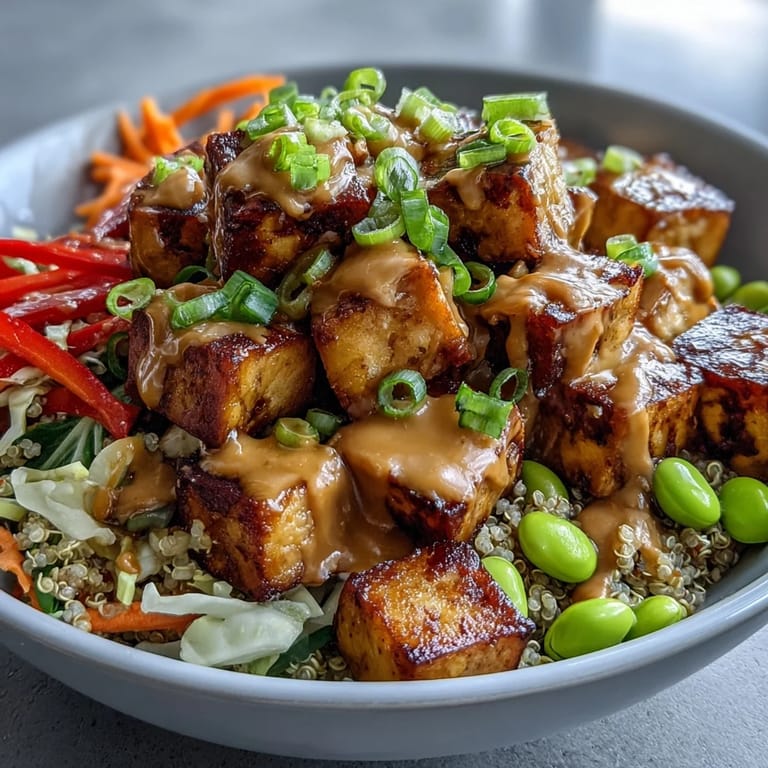
- Start with a base of warm grain, then arrange the tofu and vegetables on top in whatever way makes you happy—this is your moment. Drizzle the peanut sauce generously over everything, then scatter with roasted peanuts, sesame seeds, and fresh cilantro or mint if you have it.
- Eat it while it's warm:
- The warm grain and crispy tofu contrasted with cool vegetables and that creamy-spicy sauce is exactly what makes this bowl work.
 Pin It
 My partner and I had a moment last spring where we were both exhausted from work, and instead of ordering takeout, I threw this together in the time it would have taken for delivery. We sat by the window eating, not talking much, just quietly amazed that something so good could happen on a random Wednesday night. That's when I knew this recipe had become more than just a bowl—it was a way to take care of ourselves without it feeling like a chore.
Why This Bowl Actually Works
The genius of this bowl is the contrast—crispy against soft, warm against cool, rich peanut sauce against bright vegetables and fresh herbs. It's not boring because no single component does all the talking; everything works together but keeps its own personality. Every time you eat it, you're getting different textures and temperatures in the same spoonful, which keeps your brain interested and your palate satisfied.
Making It Your Own
This bowl is flexible in the best way. Some days I skip the rice and use roasted sweet potato, other days I add steamed broccoli or avocado slices. I've made the sauce spicier with extra chili flakes when I wanted heat, milder with less sesame oil when I was cooking for someone sensitive to strong flavors. The only thing I never change is the crispy tofu—that's the part that makes it special.
Storing and Reheating Tips
Assemble the bowl fresh if you can, but if you're meal prepping, store the grain, tofu, and vegetables separately in the fridge for up to three days. The sauce keeps for a week and actually tastes better after a day or two when the flavors have had time to get to know each other. When you're ready to eat, warm the grain and tofu gently, keep the vegetables cold, and dress everything right before serving so the sauce coats everything while it's still warm.
- If the peanut sauce gets too thick in the fridge, just whisk in a splash of warm water and it'll loosen right up.
- The crispy tofu is best eaten the day you make it, but reheated cubes in a hot skillet for a few minutes will crisp them back up.
- Fresh herbs lose their brightness when they sit, so add cilantro or mint just before eating for maximum impact.
 Pin It
 This bowl has become my go-to answer for "what should I make for dinner?" because it's honest food that doesn't apologize for being both nourishing and delicious. I hope it becomes that for you too.
Recipe Questions
- → Can I make this bowl ahead of time?
Yes, prepare components up to 3 days in advance. Store grains, tofu, and vegetables separately in airtight containers. Keep the sauce in a jar and shake well before serving. Reheat tofu in the oven to restore crispness.
- → What's the best way to press tofu?
Wrap the block in paper towels or a clean kitchen towel. Place it between two plates with a heavy object on top for 15-20 minutes. This removes excess moisture, allowing the tofu to become perfectly crispy when baked or pan-fried.
- → How can I adjust the peanut sauce consistency?
Start with 2 tablespoons of warm water, then add more one teaspoon at a time until reaching desired thickness. The sauce will thicken as it sits. For a thinner dressing consistency, add up to 4 tablespoons total.
- → Are there variations for the grains?
Brown rice and quinoa work beautifully. For lower carbohydrates, try cauliflower rice, sorghum, or millet. Soba or udon noodles make excellent Asian-inspired alternatives. Adjust cooking liquid and time according to package directions.
- → Can I add more protein?
Increase tofu to 500g or add shelled edamame directly into the bowl. Tempeh, seitan, or baked chickpeas offer alternative plant proteins. For non-vegan options, grilled chicken or shrimp pair well with the peanut flavors.
- → What vegetables work best in this bowl?
Choose vegetables that maintain crunch when raw or lightly cooked. Shredded broccoli stems, radish, snap peas, and bok choy are excellent additions. Roasted sweet potato or steamed broccoli add warmth and heartiness to the mix.