 Pin It
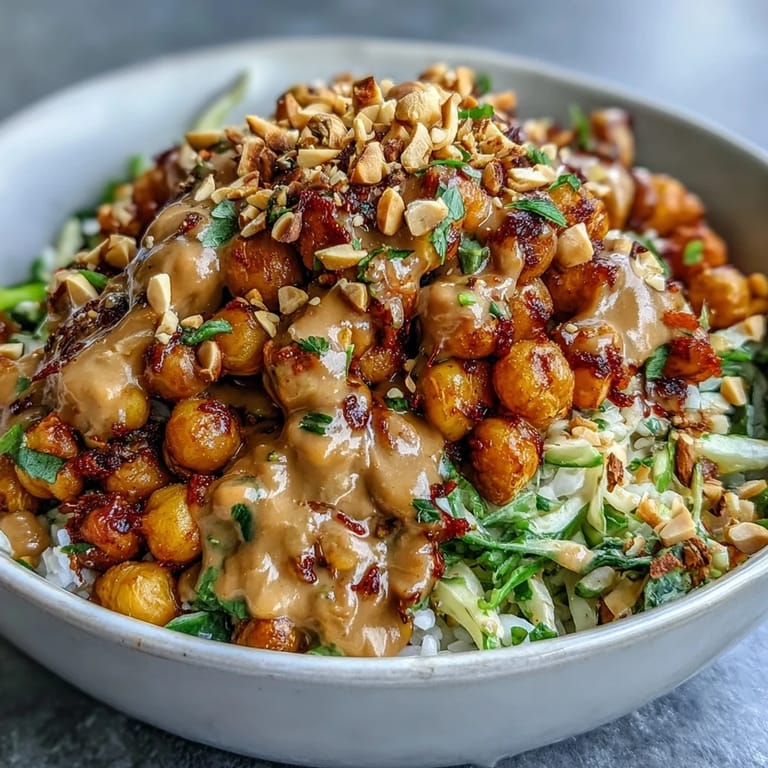
 I discovered this bowl on a Tuesday afternoon when my fridge looked like a vegetable clearance sale and I had exactly one can of chickpeas left from meal prep. Out of necessity came something I now crave weekly—those crispy roasted chickpeas are what made it stick, honestly. The peanut sauce transforms everything it touches, and suddenly what started as a way to use up odds and ends became the kind of meal you actually plan your day around.
My friend Maya came over for lunch right after I perfected this recipe, and she ate two bowls without stopping—then asked if I could make it every Thursday. That's when I realized this wasn't just another salad situation; it had crossed into actual comfort food territory.
Ingredients
- Canned chickpeas (2 cans, 15 oz each): Drain and rinse them thoroughly—this removes excess sodium and prevents a mushy texture when roasting.
- Olive oil (1 tbsp): Use good quality; it coats the chickpeas evenly and helps them crisp beautifully in the oven.
- Smoked paprika (1 tsp): This is what gives the chickpeas their warm, slightly smoky flavor—don't skip it or use regular paprika as a substitute.
- Ground cumin (1/2 tsp), garlic powder (1/2 tsp), salt (1/2 tsp), black pepper (1/4 tsp): Together these create a savory, aromatic coating that makes the chickpeas taste intentional rather than plain.
- Cooked brown rice or quinoa (2 cups): This is your base; cook ahead if you want to save time on assembly day.
- Shredded red cabbage (1 cup): The crunch and slight bitterness balance the creamy sauce perfectly.
- Julienned carrots (1 cup): Thin slices release their natural sweetness and add visual brightness.
- Sliced cucumber (1 cup): Choose firm cucumbers; they add refreshing crispness that keeps every bite interesting.
- Cherry tomatoes, halved (1 cup): Halving them prevents them from rolling around and lets their juices mingle with the sauce.
- Cooked edamame (1/2 cup): These add plant-based protein and a buttery texture that complements the chickpeas.
- Fresh cilantro (1/4 cup): Chopped at the last minute, it brightens everything with an herbaceous note.
- Creamy peanut butter (1/3 cup): Use natural or standard—just avoid the runny kind; you want something that will whisk into a proper sauce.
- Soy sauce (2 tbsp): This anchors the sauce with umami; swap for tamari if you're avoiding gluten.
- Maple syrup or honey (1 tbsp): A touch of sweetness rounds out the salt and acid in the sauce.
- Rice vinegar (1 tbsp): This adds brightness without the harsh bite of regular vinegar.
- Sriracha or chili sauce (1 tsp, optional): Add heat only if you want it; the sauce is lovely without it too.
- Minced garlic (1 clove): Mince it finely so it dissolves into the sauce rather than sitting as grainy bits.
- Warm water (2–4 tbsp): Start with two tablespoons and add slowly until the sauce reaches your preferred consistency.
- Roasted peanuts, chopped (2 tbsp): These add a second layer of peanut flavor and crucial crunch.
- Lime wedges: Essential for serving; they brighten each bite and cut through the richness of the peanut sauce.
- Sesame seeds (1 tbsp, optional): A light sprinkle adds nuttiness and visual appeal.
Tired of Takeout? 🥡
Get 10 meals you can make faster than delivery arrives. Seriously.
One email. No spam. Unsubscribe anytime.
Instructions
- Heat your oven and prep:
- Set your oven to 425°F (220°C) and line a baking sheet with parchment paper. This prevents sticking and makes cleanup infinitely easier.
- Season and roast the chickpeas:
- Toss your drained chickpeas with olive oil and all the spices—paprika, cumin, garlic powder, salt, and pepper. Spread them in a single layer on the prepared baking sheet and roast for 20–25 minutes, shaking the pan about halfway through. You'll know they're ready when they look golden and sound crispy when you shake the pan.
- Make the peanut sauce while chickpeas roast:
- In a small bowl, whisk together the peanut butter, soy sauce, maple syrup, rice vinegar, sriracha if using, and minced garlic. Slowly add warm water, whisking constantly, until the sauce reaches a smooth, pourable consistency—it should coat a spoon without being too thick or too thin.
- Prepare your grains and vegetables:
- If you haven't already cooked your rice or quinoa, do that now according to package instructions. While grains cook, slice your vegetables and arrange them nearby so assembly feels effortless.
- Assemble your bowls:
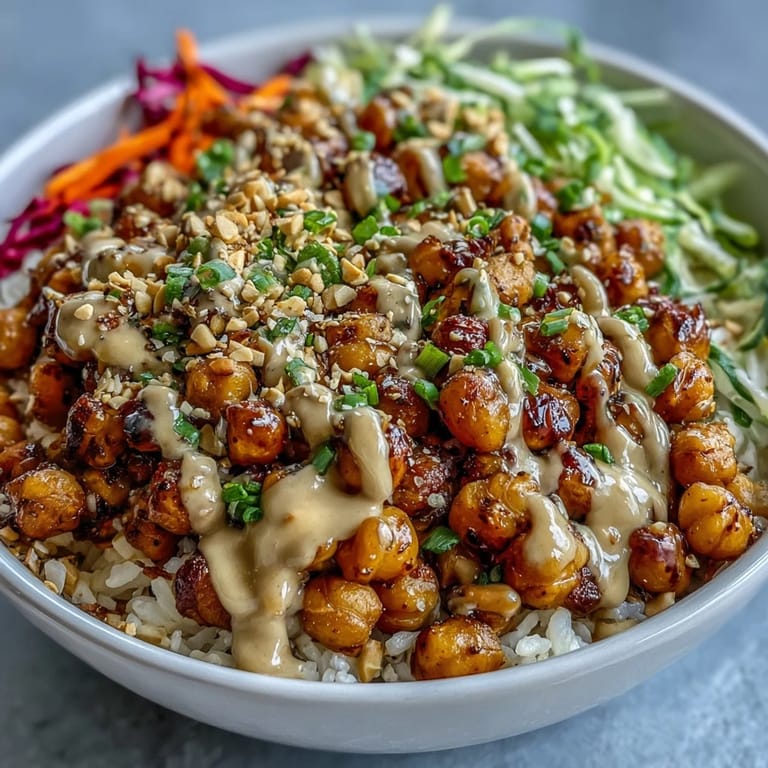
- Divide the cooked grains evenly among four bowls as your base. Arrange the roasted chickpeas, shredded cabbage, carrots, cucumber, tomatoes, edamame, and fresh cilantro on top of the grains in whatever pattern feels natural to you.
- Dress and finish:
- Drizzle the peanut sauce generously over each bowl—don't be shy, the sauce is the star. Top with chopped roasted peanuts and sesame seeds if using, then serve with lime wedges on the side so everyone can squeeze fresh citrus over their bowl.
 Pin It
 One evening I packed these bowls for myself and my partner to take to a rooftop overlooking the neighborhood, and watching the light change as we ate felt like the meal itself had slowed time down. That's when food stops being fuel and becomes a moment worth remembering.
Building Your Perfect Bowl
The beauty of this recipe is that it's a framework rather than a rigid blueprint. I've added baby spinach on mornings when I wanted more greens, swapped the rice for cauliflower rice when I was eating lower-carb, and once threw in some shredded beets because they were sitting in my crisper drawer looking lonely. The core—those crispy chickpeas and the peanut sauce—stays consistent, but everything else can bend to what your kitchen has and what your body needs that day.
The Peanut Sauce Breakdown
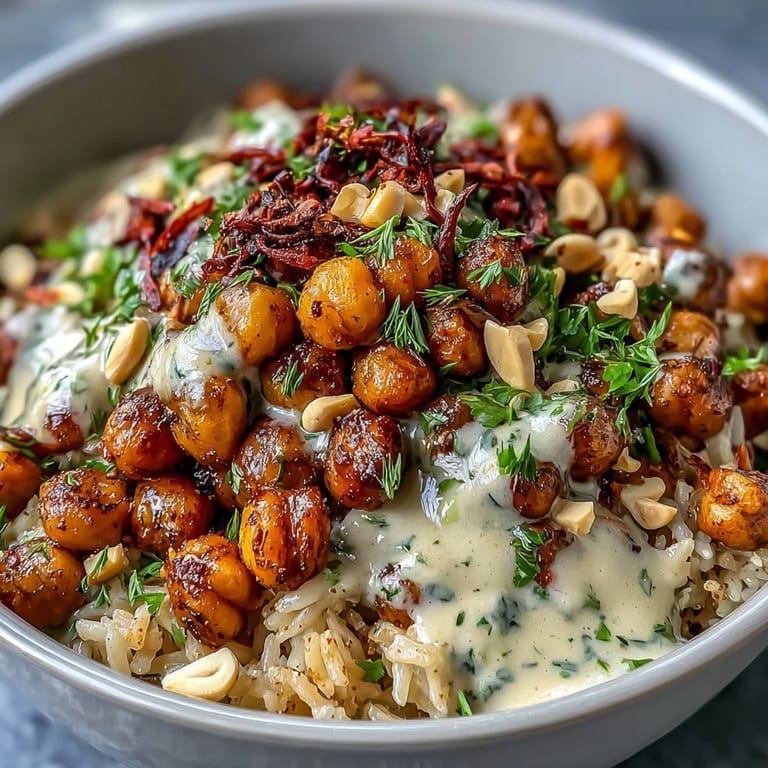
This sauce works because it balances four essential flavors: the richness of peanut butter, the saltiness of soy sauce, the brightness of rice vinegar, and the gentle sweetness of maple syrup. Garlic adds depth, and a tiny bit of heat wakes everything up without overwhelming. I've served this sauce alongside everything from grilled tofu to roasted sweet potatoes, and it elevates them all. If you find yourself making it once, you'll be whisking it together regularly—it's that good and that versatile.
Make-Ahead and Storage Tips
I prep the chickpeas and sauce on Sunday evenings, which means weeknight assembly takes about five minutes. The roasted chickpeas stay crispy in an airtight container for up to four days, and the peanut sauce keeps refrigerated for about a week—though it may thicken slightly, so just stir in a splash of water before serving. The vegetables are best assembled fresh, but you can certainly prep and store them separately if you're organized that way.
- Roast extra chickpeas to snack on straight from the container—they're addictive and disappear quickly.
- Double the peanut sauce recipe and use it on grain bowls, noodles, or as a dip for vegetables throughout the week.
- Freeze any leftover cooked grains in individual portions so you always have a bowl base ready to go.
 Pin It
 This bowl is proof that the simplest combinations often become your favorites. Make it once and you'll understand why.
Recipe Questions
- → Can I make this bowl ahead of time?
Yes, this bowl meal preps beautifully. Store roasted chickpeas, vegetables, grains, and sauce separately in airtight containers for up to 4 days. Keep the sauce at room temperature and drizzle just before serving to maintain optimal textures.
- → How do I make the peanut sauce thinner or thicker?
Start with 2 tablespoons of warm water when whisking the sauce. Add more water one tablespoon at a time until you reach your desired consistency. For a thicker dipping-style sauce, use less water or add a touch more peanut butter.
- → Can I use dried chickpeas instead of canned?
Absolutely. Cook 1 cup dried chickpeas until tender, then drain thoroughly and pat dry before tossing with oil and spices. You may need to extend roasting time by 5-10 minutes to achieve the same crispiness since canned chickpeas contain more moisture.
- → What other grains work well in this bowl?
Beyond brown rice and quinoa, try farro for its nutty flavor, bulgur for a Mediterranean twist, or cauliflower rice for a lighter low-carb option. Each grain brings a slightly different texture that complements the creamy peanut sauce.
- → Is this bowl freezer-friendly?
The roasted chickpeas and cooked grains freeze well for up to 3 months. However, fresh vegetables like cucumber and tomatoes should be added fresh after thawing. Store the sauce in the refrigerator rather than freezing for the best texture.
- → How can I add more protein to this bowl?
Consider adding grilled tofu cubes, baked tempeh, or a hard-boiled egg. For non-vegetarian options, sliced grilled chicken or shrimp would work wonderfully with the peanut sauce flavors without overwhelming the dish.