 Pin It
 There's something about the smell of collard greens wilting into a simmering broth that takes me back to Sunday afternoons when my neighbor would lean over the fence with a knowing smile, holding a bundle of greens from her garden. She'd say this soup was her secret weapon whenever anyone in her life needed real food, not just something to fill a belly. One crisp November, I finally asked for the recipe, and what she handed me was more of a suggestion than a prescription, scribbled on the back of an old grocery list. That looseness is exactly what makes this soup so forgiving and so deeply comforting.
I made this for a friend who'd just moved into a new apartment with nothing but a hot plate and a single pot, and watching her face light up as she tasted it was worth every chop of the knife. She kept saying it tasted like someone cared about her, which is exactly what homemade soup does. Now whenever I make it, I think of her sitting on that kitchen floor, steam rising from the bowl, finally feeling at home.
Ingredients
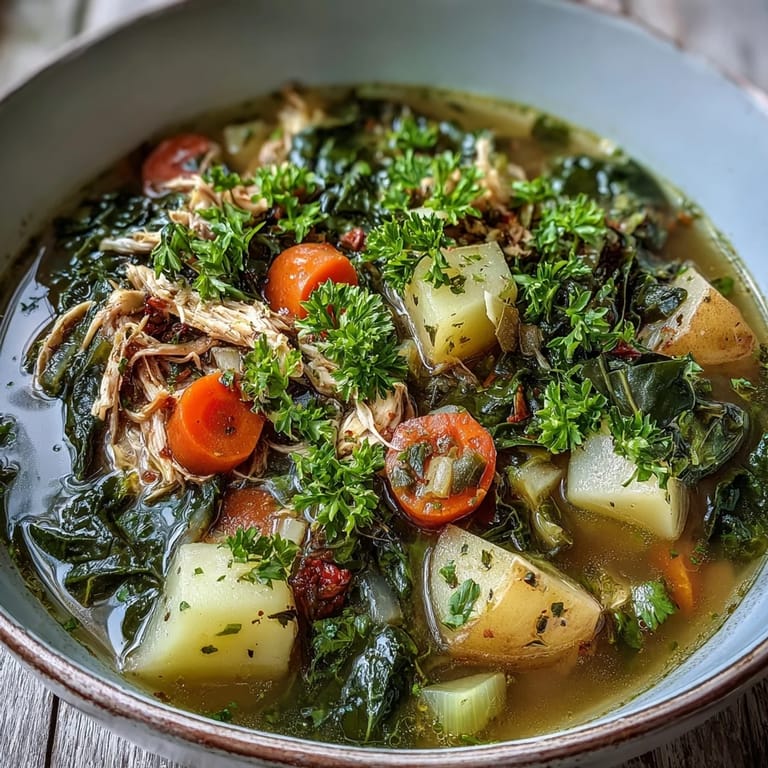
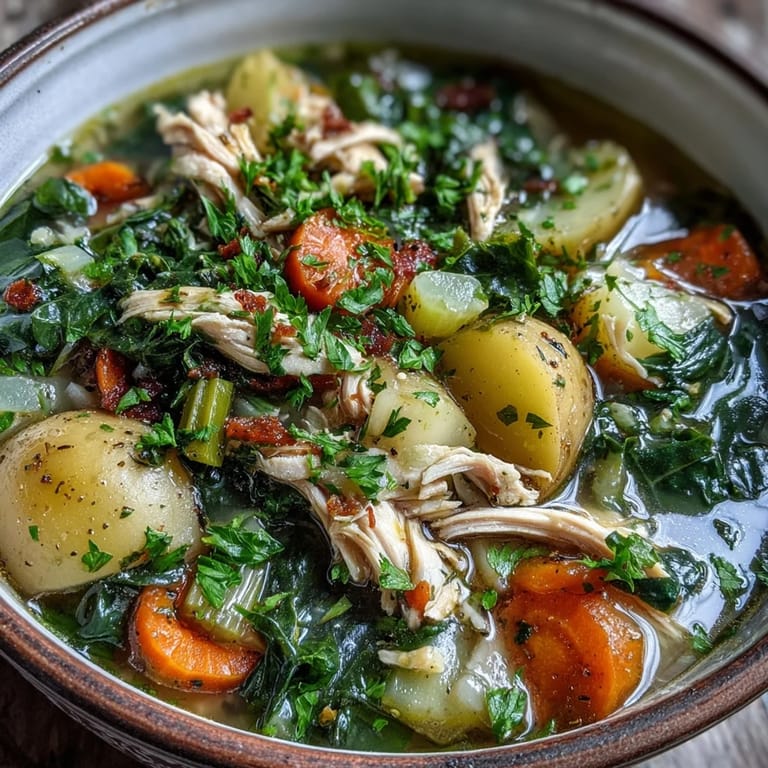
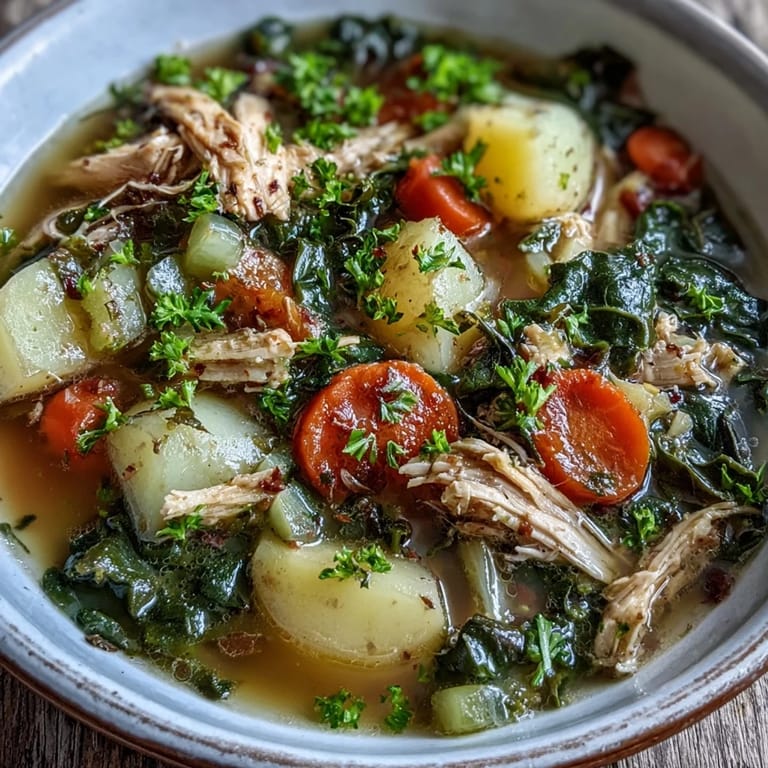
- Boneless, skinless chicken breasts: Two medium breasts shred into tender threads that distribute evenly through the broth, absorbing all those savory flavors without drying out.
- Collard greens: The star player here, with a deeper, earthier taste than kale and a texture that holds up beautifully in the heat; remove those woody stems because they won't soften no matter how long you cook them.
- Yukon Gold potatoes: Their natural creaminess melts slightly into the broth, thickening it gently without any cream or thickening agents.
- Carrots and celery: The classic flavor foundation that builds depth as they soften and release their sweetness into every spoonful.
- Onion and garlic: Three minutes of sautéing these two together is where the whole soup gets its soul, so don't rush it.
- Chicken broth: Low-sodium is key because you'll be seasoning to taste and don't want to end up with an overly salty pot.
- Smoked paprika: Just one teaspoon adds a subtle warmth and color that makes people ask if you've been smoking meat all afternoon.
- Bay leaf and thyme: These dried herbs are your backbone, infusing the broth with an understated herbal note that ties everything together.
- Lemon juice: Added at the very end, this brightens all the heavy, earthy flavors and makes you taste the collard greens instead of just feeling full.
Tired of Takeout? 🥡
Get 10 meals you can make faster than delivery arrives. Seriously.
One email. No spam. Unsubscribe anytime.
Instructions
- Build your flavor base:
- Heat the olive oil over medium heat and let the onion, carrots, and celery soften for about five or six minutes, stirring occasionally so nothing sticks or browns too quickly. You'll know it's ready when the kitchen smells sweet and the vegetables have lost their raw edges.
- Wake up the garlic:
- Add your minced garlic and cook for just one minute, watching it carefully because garlic can go from fragrant to burnt in seconds, and burnt garlic tastes bitter in a way that no amount of seasoning can fix.
- Create the broth base:
- Add the chicken breasts whole, then add the potatoes, bay leaf, thyme, smoked paprika, salt, and pepper; pour in all that chicken broth and you'll see the pot transform from vegetables to something that actually looks like soup.
- Simmer the chicken and potatoes:
- Bring everything to a boil, then immediately turn the heat down to a low simmer and cover the pot; after about 20 minutes, the chicken will be cooked through and the potatoes will yield easily to a fork.
- Shred and return the chicken:
- Pull the chicken breasts out with tongs and let them cool just enough to handle, then use two forks to pull them into shreds that will naturally scatter through the soup. Return them to the pot and let them soak up all that broth.
- Add the collard greens:
- Stir in your chopped collard greens and let them simmer uncovered for about ten to twelve minutes, watching as they shift from bright green to a deeper, more tender state. Don't walk away during this part because you want to catch them right when they're soft but still have some character.
- Finish with brightness:
- Squeeze in the lemon juice, taste, and adjust your salt and pepper; the lemon is essential because it lifts all those deep flavors and makes the soup taste fresher than it actually is.
- Serve with intention:
- Ladle into bowls, scatter some fresh parsley on top if you have it, and watch someone's face soften as they take the first spoonful.
 Pin It
 There was a winter morning when I brought this soup to someone who was sick, and they sat up straighter with each sip, like the warmth and nourishment were literally repairing something inside them. That's when I understood why my neighbor guarded this recipe so carefully, not because it was fancy or complicated, but because it works at a level deeper than taste.
The Magic of Collard Greens
Collard greens have this humble, straightforward quality that makes them easy to overlook until you actually taste them cooked properly, and then you realize they're not trying to be trendy or delicate, they're just satisfying in a way that sticks with you. In the South, they've been feeding people for generations because they're reliable, nutritious, and they actually get better when cooked low and slow. In this soup, they soften enough to cut with a spoon but keep enough structure that you can feel them as a distinct ingredient, not just part of the background broth.
Making It Your Own
This soup is forgiving enough to handle your preferences and whatever vegetables you have taking up space in your crisper drawer. I've made it with kale when collard greens weren't available, and with Swiss chard when I was feeling fancy, and each version told a slightly different story but tasted equally honest. The chicken can be replaced with white beans if you want to go vegetarian, or you could add a Parmesan rind during cooking if you want to dig deeper into the savory notes, just remember to fish it out before serving.
Serving Suggestions and Storage
Serve this soup with thick slices of crusty bread for soaking up the broth, or ladle it over brown rice or wild rice if you want something more substantial. It reheats beautifully and tastes even better on day two or three after the flavors have had time to deepen and marry together, so make an extra batch and you've got lunches handled for the week.
- Store it in an airtight container in the refrigerator for up to four days, or freeze it in individual portions for future mornings when you need something nourishing.
- Reheat gently on the stove over medium heat, adding a splash of water or broth if it's gotten too thick.
- The lemon juice is best added fresh after reheating so it tastes bright instead of cooked down and muted.
 Pin It
 This soup is the kind of thing you learn to make not because it's on a list of recipes you should know, but because someone you trust hands it to you and it changes how you think about feeding yourself and the people you care about. Make it this week.
Recipe Questions
- → Can I use frozen collard greens instead of fresh?
Frozen collard greens work well in this soup. Add them during the last 5–8 minutes of simmering, as they're already blanched and tender. No need to thaw first—just toss them in frozen.
- → How do I store and reheat leftovers?
Cool completely and refrigerate in an airtight container for up to 4 days. The flavors actually deepen overnight. Reheat gently over medium-low heat, adding a splash of broth if needed. Freezes well for up to 3 months.
- → What's the purpose of lemon juice at the end?
Fresh lemon juice brightens the entire soup, cutting through the richness of the broth and balancing the earthy greens. It's a simple finishing touch that elevates all the flavors without making the soup taste citrusy.
- → Can I make this in a slow cooker?
Absolutely. Sauté the vegetables first, then transfer everything except the collard greens and lemon to your slow cooker. Cook on low for 6–7 hours or high for 3–4 hours. Shred the chicken, add the greens, and cook 30 more minutes.
- → What can I serve alongside this soup?
Crusty bread, cornbread, or buttery crackers make perfect accompaniments. For a lighter option, serve with a simple green salad dressed in vinaigrette. The soup is substantial enough to stand alone as a complete meal.
- → How do I prevent the potatoes from falling apart?
Yukon Gold potatoes hold their shape beautifully, but avoid cutting them too small—keep pieces around ¾-inch. Don't boil vigorously; a gentle simmer keeps everything intact while still cooking the potatoes through.