 Pin It
 One Tuesday evening, I was standing at the fishmonger's counter with no dinner plan, just a craving for something that felt both nourishing and a little bit special. The salmon looked impossibly fresh, and I remembered a conversation with a coworker about miso—how it transforms simple things into something complex and deeply satisfying. That night became the blueprint for this dish, a combination so balanced that it's become my go-to when I want to feel accomplished without spending hours in the kitchen.
I made this for my sister last spring when she was going through a phase of trying to eat better, and I watched her fork into the salmon, close her eyes, and just smile. No comments about it being healthy or virtuous—just genuine pleasure. That's when I knew this recipe was worth keeping close.
Ingredients
- Salmon fillets (4, about 150g each): The quality of your salmon matters more than you'd think; look for bright color and a clean smell, and don't be shy about asking the fishmonger which fillets look best today.
- White miso paste (2 tbsp): This is your umami anchor, bringing a subtle funkiness that makes people ask what your secret ingredient is.
- Mirin (1 tbsp): A touch of sweetness and shine; if you can't find it, dry sherry works but won't give you quite the same gloss.
- Low-sodium soy sauce (1 tbsp): Use low-sodium so you can actually taste the salmon and not just salt.
- Honey or maple syrup (1 tbsp): This helps the glaze caramelize beautifully in the oven; maple syrup adds a subtle earthiness.
- Sesame oil (1 tsp): Just a teaspoon—this stuff is potent and wonderful, so respect it.
- Freshly grated ginger (1 tsp): Grate it right before you use it; the difference between fresh and sitting in your fridge is noticeable.
- Olive or sesame oil for the spinach (2 tbsp): Sesame oil feels more authentic, but olive oil won't steer you wrong.
- Shallot (1 large, thinly sliced): Shallots mellow as they cook, becoming sweeter and more refined than onions.
- Garlic cloves (2, minced): Fresh garlic only; jarred won't give you the fragrance you're after.
- Fresh ginger (1 tbsp, julienned): The thin strips stay slightly visible and add little bursts of warmth and brightness.
- Baby spinach (400g): Fresh and properly dried makes all the difference; water clinging to the leaves means soggy spinach.
- Lemon wedges: Acidity is your friend here; it cuts through the richness and brings everything into focus.
Tired of Takeout? 🥡
Get 10 meals you can make faster than delivery arrives. Seriously.
One email. No spam. Unsubscribe anytime.
Instructions
- Set your oven and prep your station:
- Preheat to 200°C and line a baking tray with parchment paper so your salmon won't stick and you'll have an easier cleanup. This small step saves you frustration later.
- Build your glaze:
- Whisk miso, mirin, soy sauce, honey, sesame oil, and grated ginger in a small bowl until smooth and shiny. The miso should dissolve completely into a silky mixture that clings to the back of a spoon.
- Prepare and glaze the salmon:
- Pat your salmon fillets completely dry—this is crucial because water prevents browning and caramelization. Lay them on your prepared tray and brush generously with the miso glaze, making sure every surface gets coated.
- Bake until golden:
- Slide the tray into the oven for 10–12 minutes; you're looking for the glaze to turn a deeper brown and for the salmon to flake easily when you press it gently with a fork. The inside should still feel slightly yielding, not firm.
- Start the spinach while salmon bakes:
- Heat your oil in a large skillet over medium heat and add the sliced shallot, minced garlic, and julienned ginger. Let them sizzle and soften for a minute or two until the kitchen smells incredible.
- Wilt the spinach in stages:
- Add your spinach by the handful, stirring constantly as each batch shrinks down and makes room for more. This might feel like you're filling your pan with an impossibly large amount of leaves, but they'll reduce dramatically.
- Season and finish:
- Once all the spinach is wilted, drizzle with soy sauce and crack fresh black pepper over everything. Stir gently to coat, then taste and adjust if needed.
- Plate and serve:
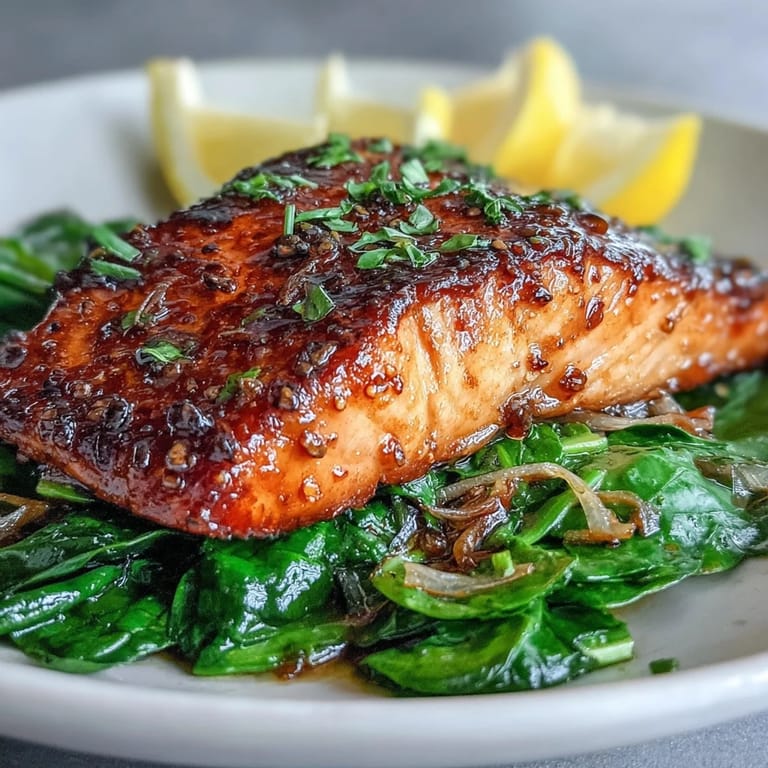
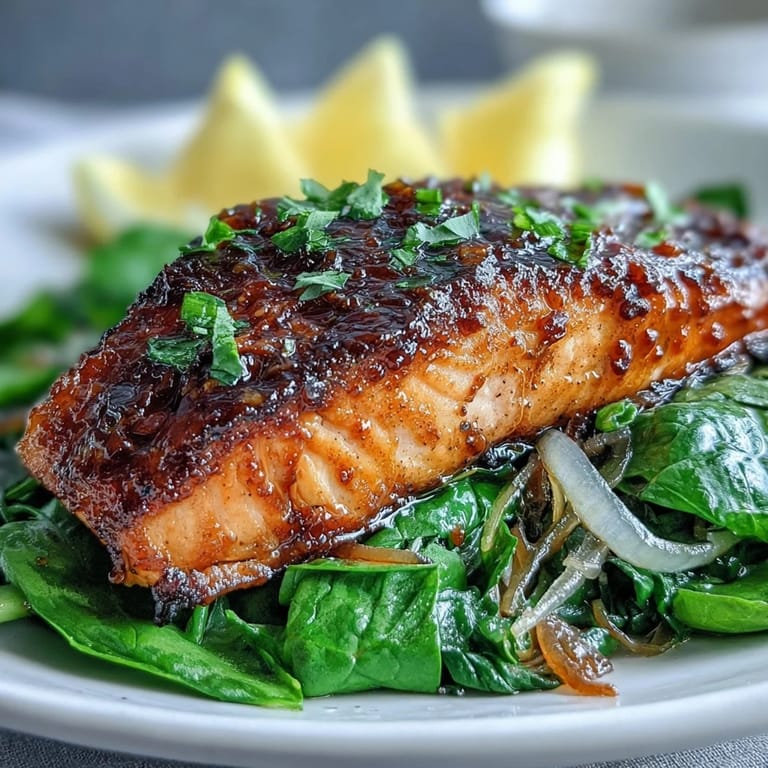
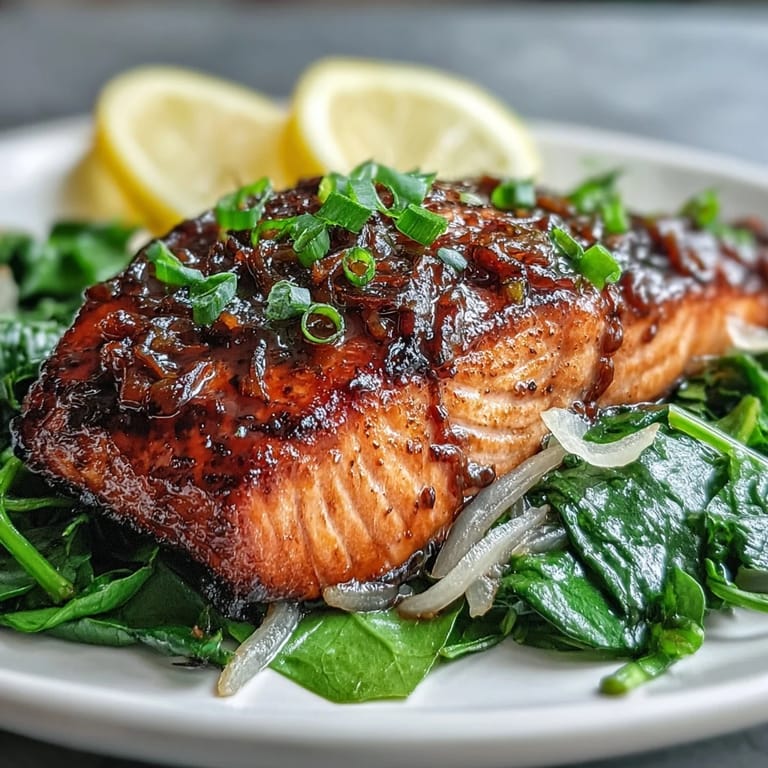
- Divide the spinach among your plates, top each portion with a salmon fillet, and squeeze fresh lemon over everything. The brightness of the lemon is the final touch that makes the whole dish sing.
 Pin It
 There's something almost meditative about watching spinach transform from an enormous pile of green into something silky and manageable. My grandmother used to say that learning to cook well is really just learning patience, and this dish proved her right.
The Magic of Miso
Miso is one of those ingredients that seems intimidating until you realize it's just fermented soybeans doing what they do best. The white variety is milder and slightly sweeter than darker miso, which makes it perfect for salmon—it complements without overwhelming. Once you understand that miso is just adding depth and complexity rather than making something taste explicitly salty or funky, you'll start using it everywhere.
Timing and Temperature
The beauty of this dish is that everything finishes at the same moment if you pay attention. While the salmon is baking for those 10–12 minutes, you have just enough time to get your spinach started without anyone standing around waiting for food. It's the kind of efficiency that makes weeknight cooking feel less like a chore and more like a small win.
Building Flavor Without Fuss
Each component of this dish is doing something specific—the ginger adds warmth, the garlic adds depth, the shallot adds sweetness, and the lemon adds brightness. There's no confusion or muddiness here, just clean flavors that know their job. This is what I mean when I tell people that good cooking isn't complicated; it's just intentional.
- Taste your spinach before plating and adjust seasoning; you might need a touch more soy sauce or a crack more pepper depending on your palate.
- Have your lemon wedges ready to go before you plate, so the salmon doesn't sit getting cold while you're hunting for citrus.
- If you're feeding people who are skeptical about spinach, don't mention it—just let them taste the dish and notice how delicious it is.
 Pin It
 This is the kind of meal that makes you feel nourished rather than just full, and that's worth something. Serve it with a simple bowl of rice or quinoa, pour yourself something crisp to drink, and enjoy knowing you've created something genuinely delicious.
Recipe Questions
- → What does miso-glazed salmon taste like?
The miso glaze creates a savory-sweet umami flavor that caramelizes beautifully on the salmon. The white miso provides a mild, slightly salty depth while the honey adds sweetness. Combined with the nutty sesame oil and fresh ginger, it creates a complex Japanese-inspired taste that perfectly complements the rich, buttery salmon.
- → Can I use frozen spinach instead of fresh?
While fresh baby spinach yields the best texture and flavor, you can use frozen spinach in a pinch. Thaw and drain it thoroughly before sautéing, then cook it briefly with the aromatics. Note that frozen spinach will be more compact and slightly softer in texture compared to fresh.
- → How do I know when the salmon is done?
The salmon is ready when it flakes easily with a fork and the internal temperature reaches 145°F (63°C). The miso glaze should be lightly caramelized and golden. Look for the flesh to turn opaque throughout while remaining moist. Start checking at the 10-minute mark to avoid overcooking.
- → Can I make this dish ahead of time?
You can prepare the miso glaze up to 3 days in advance and store it in the refrigerator. The salmon can be marinated in the glaze for up to 24 hours before cooking for even more flavor. However, for best results, cook the salmon and spinach just before serving, as reheating may cause the salmon to dry out and the spinach to become mushy.
- → What sides pair well with this dish?
Steamed jasmine rice or cauliflower rice are excellent choices to soak up the flavorful miso glaze. You could also serve it with soba noodles, roasted Japanese sweet potatoes, or a simple cucumber salad with rice vinegar dressing. The dish pairs beautifully with crisp white wines like Sauvignon Blanc or dry Riesling.
- → Is white miso paste necessary or can I substitute it?
White miso (shiro miso) is preferred for its milder, slightly sweet flavor that pairs perfectly with salmon. Red miso will be stronger and saltier, which can overpower the delicate fish. If you need a substitute, try a mixture of soy sauce with a touch of tahini and honey, though the authentic umami depth will be less pronounced.