 Pin It
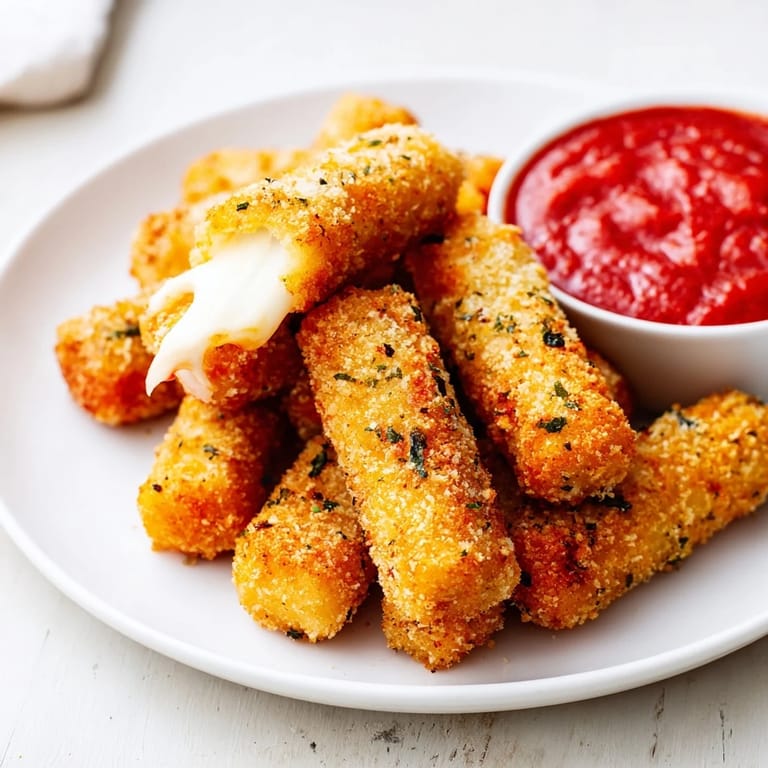
 Standing in my tiny college apartment kitchen, I watched in horror as my first batch of mozzarella sticks erupted into molten cheese chaos in the hot oil. My roommate and I had been craving that crispy-gooey bar food magic, but clearly something had gone terribly wrong. After some investigation and many ruined batches later, I figured out that freezing time makes all the difference between sad cheese puddles and golden perfection. Now these are my go-to for game nights and casual gatherings, always disappearing faster than I can fry them.
Last Super Bowl, I made triple batches for friends who swore they hated homemade fried foods. After one bite, they were hovering around the stove, asking when the next round would be ready. Theres something deeply satisfying about pulling a perfectly golden stick from the oil, still holding its shape like a little cheese treasure.
Ingredients
- Mozzarella cheese: Cut sticks yourself rather than buying pre-cut ones which have additives that affect melting
- All-purpose flour: Creates the essential first layer that helps the egg adhere properly
- Eggs and milk: The whisked mixture forms the sticky bridge between flour and crumbs
- Panko breadcrumbs: Larger flakes create that restaurant style crunch regular crumbs cant match
- Garlic powder and Italian herbs: Infuses the coating with flavor so every bite is seasoned throughout
- Vegetable oil: Needs to maintain 350°F for proper frying without absorbing into the coating
- Marinara sauce: Warm it up while frying so everything hits the table at the perfect temperature
Tired of Takeout? 🥡
Get 10 meals you can make faster than delivery arrives. Seriously.
One email. No spam. Unsubscribe anytime.
Instructions
- Set up your breading station:
- Arrange three shallow bowls in assembly line fashion with flour in the first, whisked eggs and milk in the second, and breadcrumbs mixed with garlic powder, herbs, salt and pepper in the third. This systematic setup prevents the dreaded cross-contamination mess and keeps your hands from becoming cemented with coating.
- Coat each stick methodically:
- Roll each mozzarella piece in flour first, shaking gently to remove excess before dipping it into the egg mixture. Let any extra egg drip off, then press the stick firmly into the breadcrumb mixture, turning to coat all sides evenly.
- Double coat for extra insurance:
- Repeat the egg and breadcrumb steps again, creating a thicker barrier that keeps the cheese contained during frying. This extra minute of effort pays off enormously when you bite into that perfectly sealed exterior.
- Freeze until firm:
- Arrange coated sticks on a parchment lined baking sheet and freeze for at least one hour. This crucial step firms the cheese so it melts gradually rather than bursting through the coating the moment it hits hot oil.
- Heat the oil properly:
- Pour enough vegetable oil into your deep fryer or heavy pot to reach 3 inches depth and heat to exactly 350°F. An instant read thermometer is your friend here because oil that is too cool makes soggy sticks while oil that is too hot burns the coating before the cheese melts.
- Fry in small batches:
- Carefully lower frozen sticks into the hot oil, cooking only 4 or 5 at a time to maintain the oil temperature. Fry for 1 to 2 minutes, turning occasionally with tongs, until deep golden brown and crisp on all sides.
- Drain and serve immediately:
- Transfer finished sticks to a paper towel lined plate to absorb excess oil, then serve right away with warm marinara sauce while the cheese is at its stretchiest, most irresistible state.
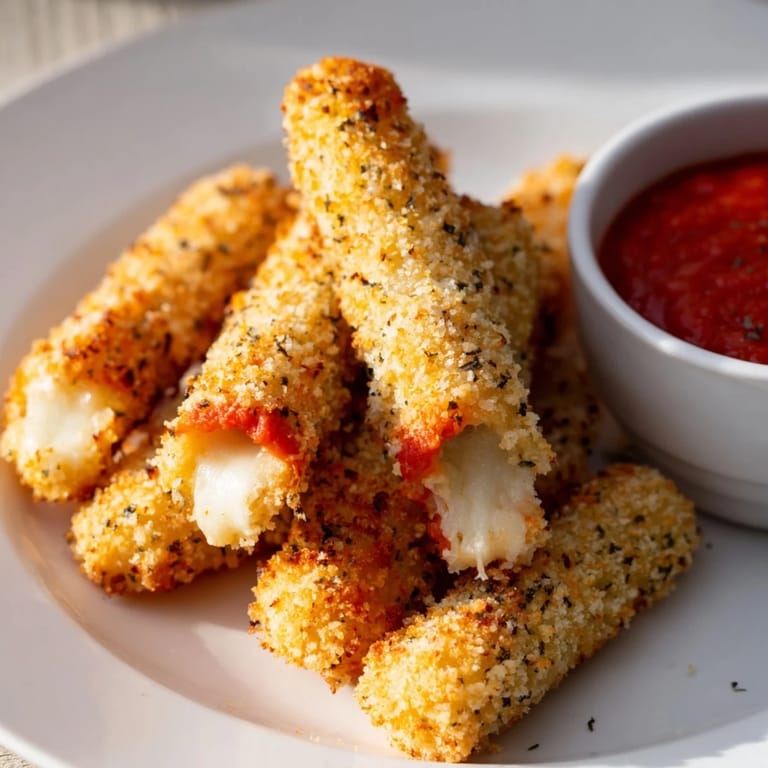 Pin It
 My niece helped me make these last holiday season, and she took such pride in her breading technique that she demanded everyone know which sticks were hers. Seeing kids get excited about cooking something from scratch, especially something this indulgent, reminded me why simple comfort foods bring people together in the best ways.
The Freezing Secret
I learned through those early disasters that chilled cheese resists melting long enough for the coating to set up and become impermeable. The hour in the freezer transforms soft cheese into a semi frozen state that can handle the heat without immediately liquefying and escaping its crispy shell.
Oil Temperature Wisdom
Invest in a good kitchen thermometer if you plan to fry regularly. Visual cues like shimmering oil or bubbles around a wooden spoon handle are helpful but imprecise. Consistent temperature control is what separates restaurant quality results from disappointment.
Make Ahead Magic
You can bread and freeze these sticks for up to two weeks before frying. Pull them directly from the freezer to the hot oil, adding just 30 seconds to the cooking time. This makes party prep infinitely more manageable since the messy work happens days in advance.
- Fry in small batches and keep finished sticks warm in a 200°F oven
- Season immediately after frying with a pinch of salt while they are still hot
- Never skip the double coating unless you enjoy cleaning cheese explosions
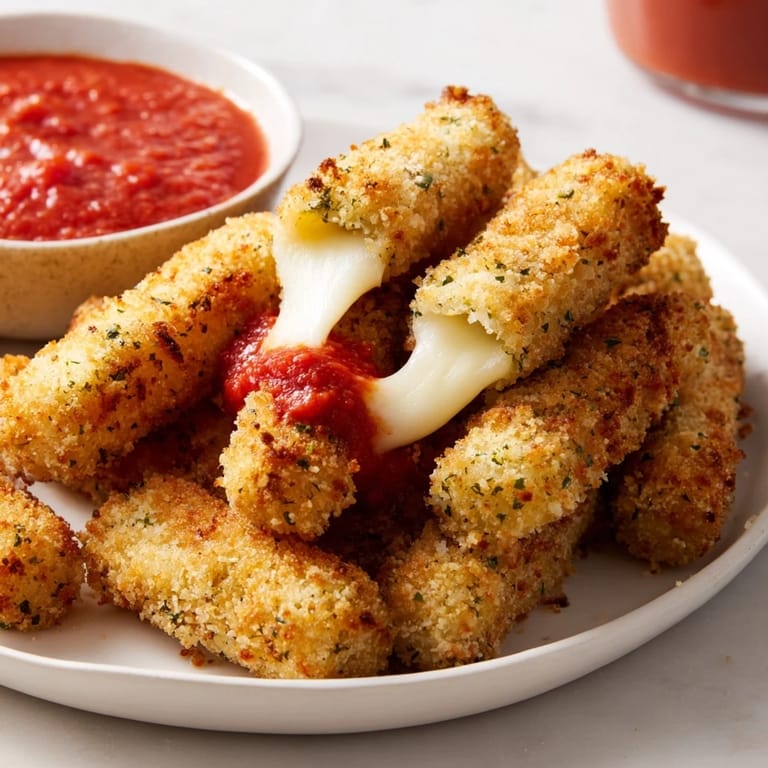 Pin It
 These mozzarella sticks have evolved from my college kitchen disasters into the kind of comfort food that makes any gathering feel like a celebration. Hope they become a staple in your kitchen too.
Recipe Questions
- → Can I bake these instead of frying?
Yes, baking works well. Preheat oven to 200°C (400°F) and bake for 10-12 minutes until golden. The texture will be slightly less crispy than deep-frying.
- → How long should I freeze the sticks?
Freeze for at least 1 hour until firm. This step is crucial—the cold coating prevents cheese from leaking into the hot oil during frying.
- → Can I make these ahead of time?
Absolutely! Prepare and freeze the uncooked sticks for up to 2 weeks. Fry directly from frozen, adding an extra 30 seconds to cooking time.
- → What oil temperature is best?
Maintain oil at 180°C (350°F). Too hot and the coating burns before cheese melts; too cool and they become greasy. Use a thermometer for accuracy.
- → Do I really need to double-coat?
Highly recommended. The double coating creates a sturdy barrier that keeps the melted cheese inside while providing satisfying crunch. Single coating may split during frying.